
At 6:15 in the morning, Meera opened the same spreadsheet she had been ignoring for three years.
Nothing about it looked dramatic. No luxury car. No viral income screenshot. No "how I became rich at 24" headline. Just small numbers, boring rows, and one quiet truth she had almost missed.
Three years earlier, she had started saving a small fixed amount every month. At first, it felt pointless. Some months, the amount looked too small to respect. Some months, one weekend dinner could have consumed it. Some months, she wondered if disciplined people were simply pretending that patience was exciting.
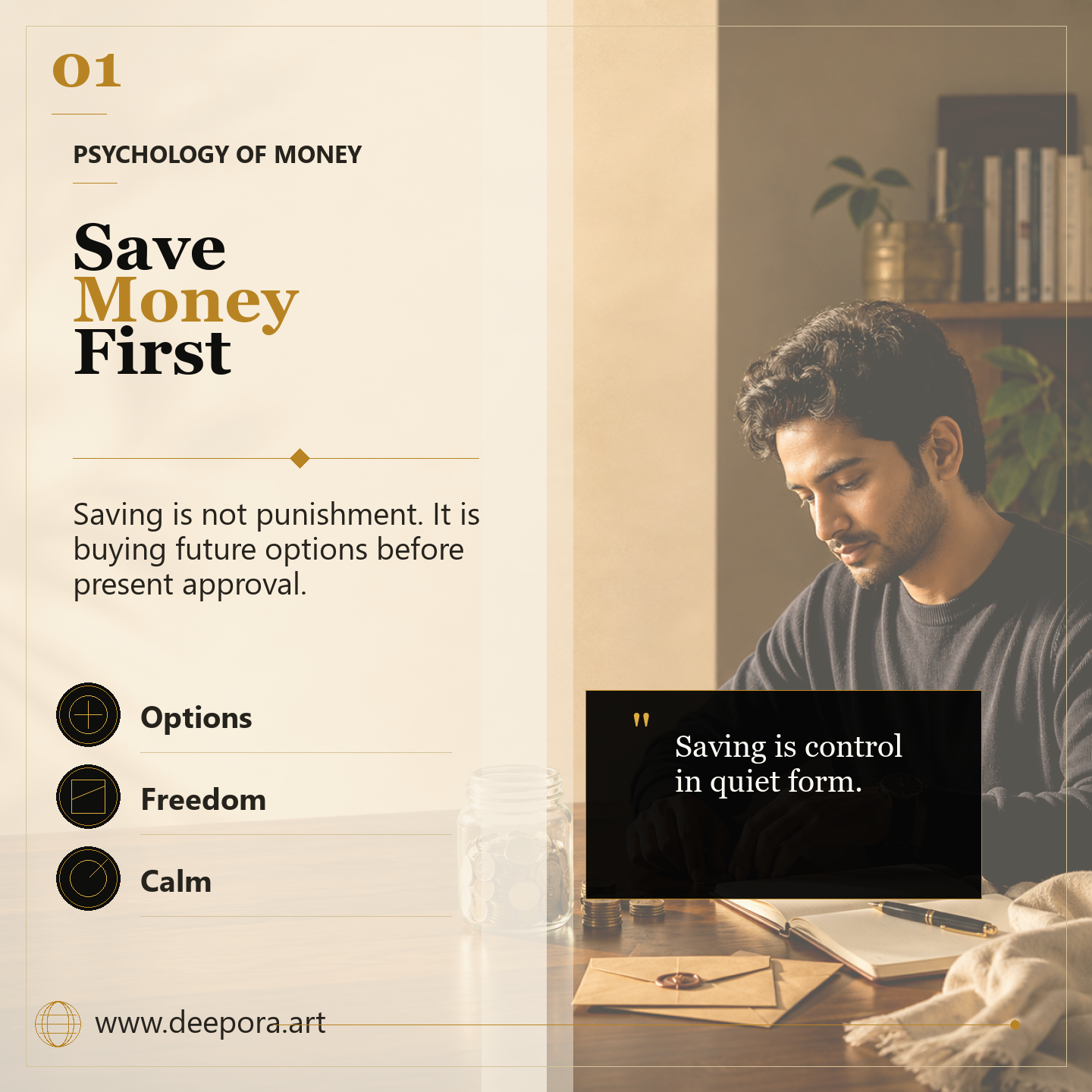
But that morning, the spreadsheet looked different. The number had crossed a line. Not a life-changing line, but a confidence-changing line. Enough to cover an emergency. Enough to say no to a bad job. Enough to feel that her future was not completely dependent on her next salary.
Meera whispered something most people learn late: the first stage of compounding does not look like magic. It looks like nothing is happening.
That is why the compounding lesson from The Psychology of Money by Morgan Housel matters so much. The book reminds us that the greatest money results are often not created by one brilliant move. They are created by a small base, protected for a long time, allowed to keep working without constant interruption.
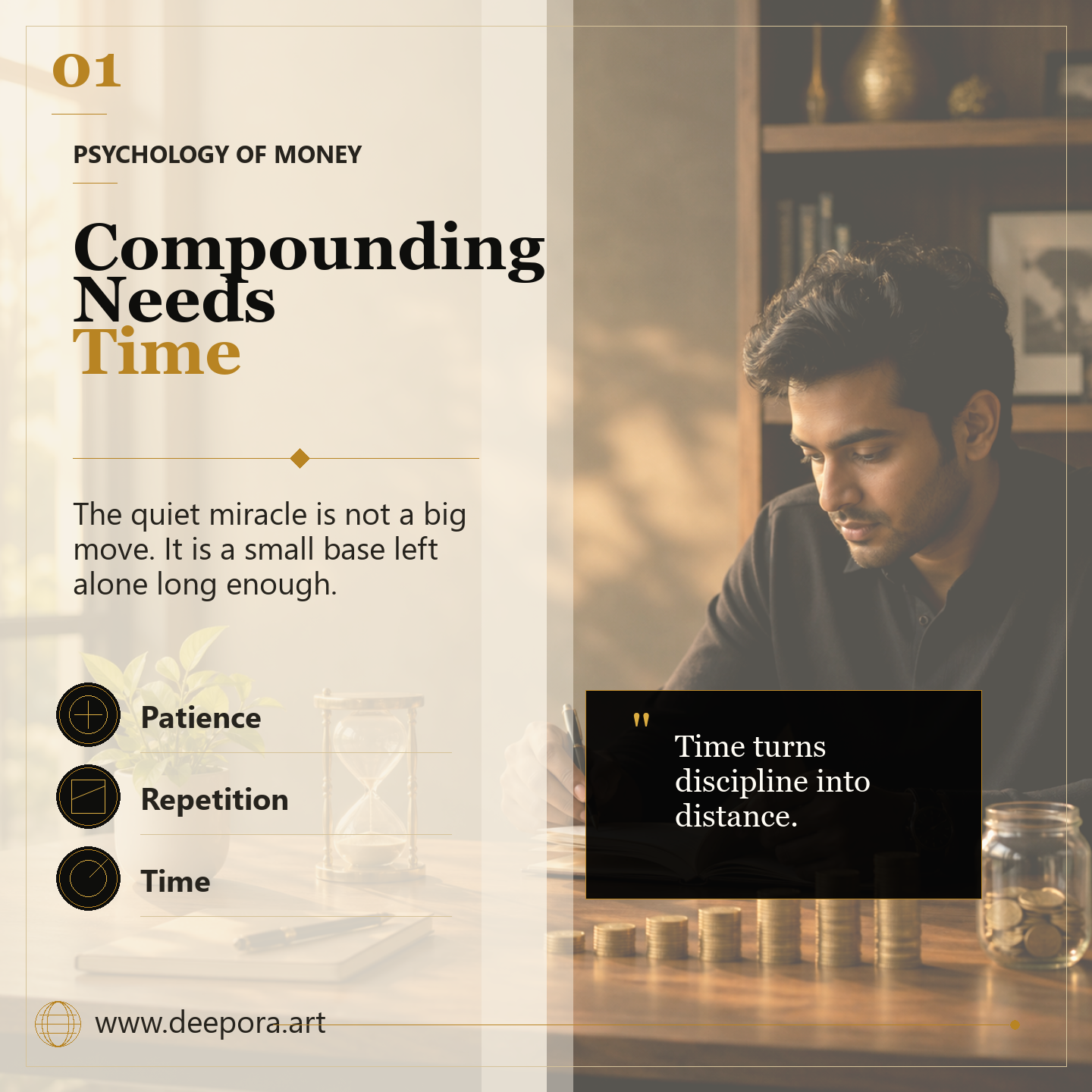
What The Psychology of Money Teaches About Compounding
Compounding is simple in definition and difficult in real life.
In money, compounding means your gains can begin to earn gains. In habits, it means your repeated actions begin to create an identity. In skills, it means one layer of knowledge makes the next layer easier. In reputation, it means years of reliability quietly create trust that one loud performance cannot buy.
The problem is that compounding is not built for impatient eyes.
Human beings love straight lines. We want effort today and reward tomorrow. We want a visible result after the first week. We want the curve to prove itself before we commit to it. But compounding usually begins with a flat line. The early stage feels slow because the base is still small.
| What people expect | What compounding often does |
|---|---|
| Fast proof | Quiet accumulation |
| Motivation every day | Systems that continue on ordinary days |
| One big breakthrough | Many small actions kept alive |
| Visible growth immediately | Slow start, then surprising distance |
This is why compounding is less about mathematics and more about behavior. The formula may be numerical, but the real battle is emotional: can you keep going when the result is still too small to impress anyone?
Meera's Mistake: She Wanted A Tree Before Protecting The Seed
When Meera first started working, she made the classic beginner mistake. She thought wealth should feel visible.
Her friends upgraded phones. Someone bought a bike on EMI. Someone posted a resort weekend every month. Someone started trading and talked like every candle on the chart was a message from destiny.
Meera saved quietly, but her savings did not give her the same social reward. Nobody clapped when she skipped a random purchase. Nobody commented, "Amazing discipline," when she avoided a new subscription. Nobody shared her emergency fund on Instagram.
So she almost stopped.
That is the dangerous moment in every compounding story. The beginning is when the action is most fragile because the reward is least visible.
A seed does not look like shade. A first deposit does not look like wealth. A first workout does not look like health. A first page does not look like wisdom.
But if you keep digging up the seed to check whether it has become a tree, you kill the very process you are trying to trust.

The Real Formula: Base, Rate, Time, and Survival
Most people talk about compounding as if it has only two ingredients: money and return. Deepora looks at it with four ingredients:
| Ingredient | Meaning | Real-life question |
|---|---|---|
| Base | The amount, habit, skill, or reputation you start building from. | What am I consistently adding to? |
| Rate | The speed of improvement or return. | Can this grow without forcing dangerous risk? |
| Time | The years you allow the process to work. | Am I thinking in months or decades? |
| Survival | Your ability to avoid interruption. | What could make me stop too early? |
Most people obsess over rate. They ask, "How can I grow faster?" But Morgan Housel's broader message points toward a deeper question: how can I stay in the game long enough?
A high return that destroys you is not compounding. It is fireworks. Bright, loud, and gone.
Compounding needs survival. It needs cash buffers, low ego, manageable debt, patience, and the humility to avoid plans that only work when life is perfect.
Why Impatience Breaks The Curve
Meera's biggest enemy was not lack of intelligence. It was interruption.
Every time she saw someone move faster, she wanted to change the plan. Every time the market looked boring, she wanted excitement. Every time her savings felt small, she wanted a shortcut. The danger was not one bad month. The danger was building a life where every emotion could interrupt the system.
This is where many people lose compounding:
- They start late because the first amount feels too small.
- They stop early because the curve still looks flat.
- They chase speed and take risks they cannot survive.
- They upgrade lifestyle every time income increases.
- They compare their first chapter to someone's tenth year.
- They keep changing strategies before one strategy has enough time to work.
Compounding does not ask for constant drama. It asks for protection.
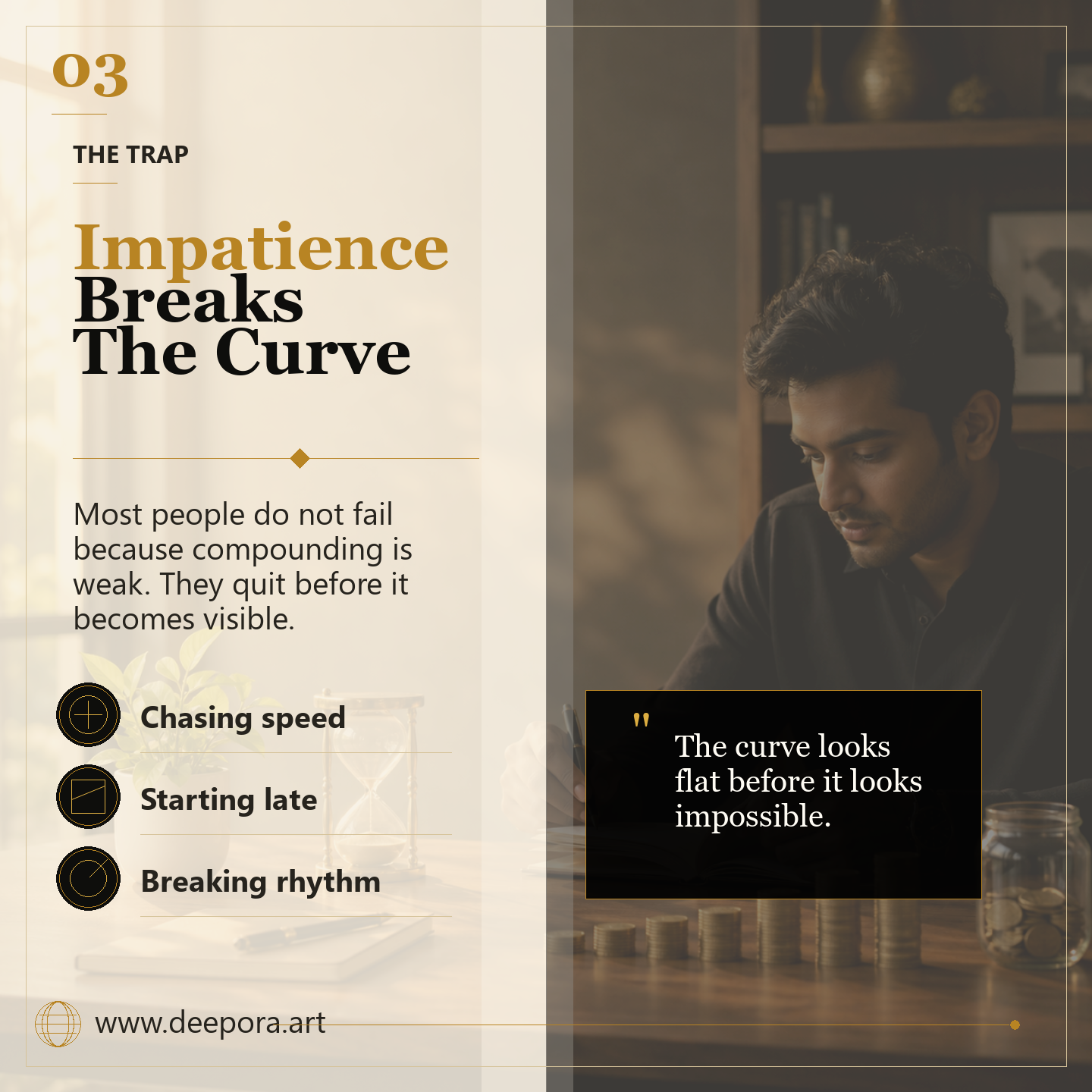
Compounding In Money, Habits, and Identity
Deepora's core belief is simple: book lessons matter only when they become life lessons.
So do not limit compounding to a bank account. The same pattern appears everywhere.
| Area | Small base | Compounded result |
|---|---|---|
| Money | Saving a small amount every month | Emergency fund, options, freedom, calm |
| Skill | Studying 30 minutes daily | Better judgment, higher income, confidence |
| Health | Walking daily and sleeping better | Energy, mood stability, long-term strength |
| Writing | One page a day | Clear thinking, body of work, reputation |
| Relationships | Small acts of reliability | Trust that survives hard seasons |
This is why tiny actions matter. Not because one action changes everything, but because repeated action changes the base from which your future grows.
10 Lessons From The Compounding Lesson
1. Start before the number feels impressive
The first amount will usually feel small. Start anyway. Small is not the enemy of compounding. Delay is.
2. Protect the habit before improving the amount
In the beginning, consistency matters more than size. A small monthly saving habit that survives is better than an aggressive plan you quit after two months.
3. Do not confuse boredom with failure
The early stage of compounding feels boring because the base is still growing. Boredom may be a sign that the system is finally stable enough to work.
4. Avoid interruptions that reset the curve
Unplanned debt, panic decisions, lifestyle inflation, and emotional spending can break the curve. The person who protects the base gives time something to multiply.
5. Think in years, not weekends
Compounding rewards the person who can stretch their imagination. Ask what this action becomes after five years, not only how it feels this Friday.
6. Increase slowly
When income grows, increase savings before increasing lifestyle. Do not let every raise become a new bill.
7. Respect survival
The best plan is not the one with the most exciting projection. It is the one you can continue through bad moods, bad markets, and bad months.
8. Let skill compound too
Money saved gives options. Skill built gives earning power. Together, they create a stronger base than either one alone.
9. Stop digging up the seed
Checking every day can make you emotional. Set the system, review at sensible intervals, and let time do work you cannot force.
10. Use compounding to buy peace, not only status
The best result of compounding is not just a bigger number. It is calm, choices, dignity, and the ability to say no when life asks too much.
Action Steps: Build Your Compounding System Today
- Choose one base. Money, skill, health, writing, or reputation.
- Make it repeatable. Pick an action so small you can continue during ordinary weeks.
- Automate the good behavior. Auto-save, recurring study time, fixed writing slot, or scheduled walks.
- Protect against interruption. Reduce debt, keep a buffer, remove unnecessary subscriptions, and avoid panic decisions.
- Review monthly, not emotionally. Look for progress, adjust gently, then return to the system.

Internal Links: Continue The Money Cluster
If this lesson helped, read these next:
- Wealth Is What You Do Not See - why quiet assets often matter more than visible lifestyle.
- Getting Rich vs Staying Rich - why survival keeps compounding alive.
- Risk and Luck - why one outcome never tells the whole truth.
- Atomic Habits Small Changes - how tiny actions compound in habits and identity.
FAQs
What is compounding in simple words?
Compounding means growth building on previous growth. In money, gains can earn more gains. In life, small repeated actions can create skills, trust, health, and identity over time.
Why does compounding feel slow at first?
The early base is small, so the visible growth is also small. The curve often looks flat for a long time before the accumulated effect becomes obvious.
What breaks compounding?
Frequent interruptions break compounding: panic selling, debt traps, lifestyle inflation, inconsistency, over-risking, and constantly switching plans before time can work.
How do I start if I do not have much money?
Start with the smallest repeatable amount. The first goal is not to look rich. The first goal is to build the habit, protect the base, and increase slowly as your income and stability improve.
Reflection Prompt
Where are you asking for a tree before protecting the seed?
Write one base you can build for the next 12 months: savings, skill, health, writing, or trust. Then write the smallest daily or monthly action that keeps that base alive.
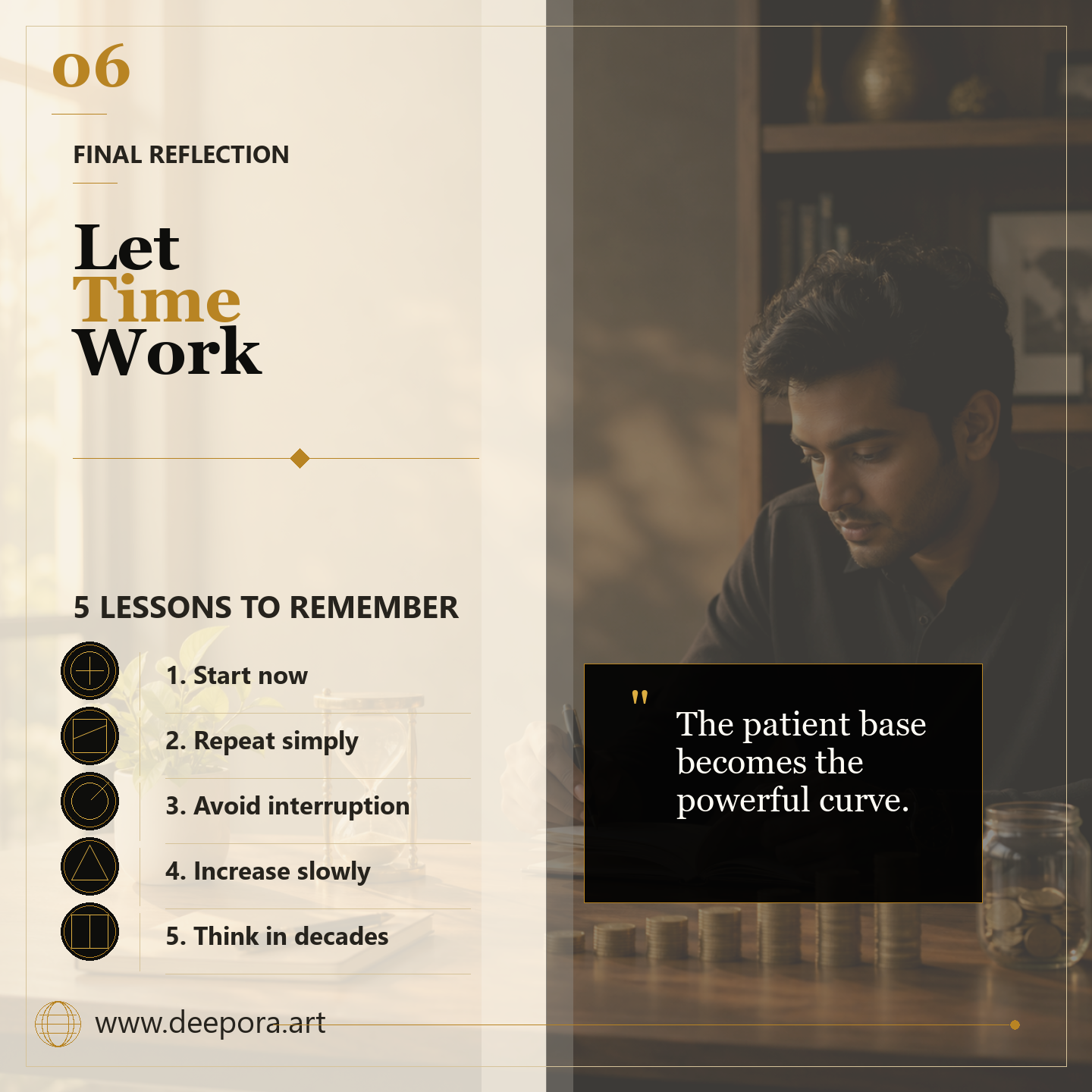
Final Deepora Lesson
Meera did not become free in one morning. She became freer through many boring mornings that finally started speaking.
That is the real compounding lesson.
You do not need every move to be dramatic. You need the right small base, protected from interruption, repeated long enough for time to become your partner.
Compounding rewards people who can stay steady when nobody is clapping yet.
Source and credit: This Deepora article is inspired by the compounding and long-term thinking ideas discussed in Morgan Housel's book The Psychology of Money. It is an educational interpretation, not financial advice. Always make money decisions according to your own situation, risk capacity, and professional guidance where needed.
Deepora CTA: Read one lesson. Apply one action. Let knowledge become life.
0 Comments