
At 11:47 p.m., Raghav looked at the same chart for the tenth time.
The number on the screen was small enough to hurt and big enough to teach. Three months earlier, he had watched a finance creator explain how he had built wealth by taking a bold bet. The video was clean. The story was inspiring. The conclusion felt obvious: winners take risk.
So Raghav copied the bet.
He did not copy the creator's savings account. He did not copy the family business that paid the creator's rent. He did not copy the fact that the creator had started before the market went up. He copied only the visible move, the part that looked brave from the outside.
Now his own account was down, his confidence was down, and the worst part was not the loss. The worst part was the question he could not answer: Was I stupid, or just unlucky?
That question is the beginning of one of the most important lessons from The Psychology of Money by Morgan Housel: risk and luck are the same force facing opposite directions. They remind us that outcomes are not always clean report cards. Sometimes a good decision meets bad timing. Sometimes a weak decision gets protected by good timing. Sometimes a person is skilled, disciplined, and still loses. Sometimes a person is reckless, lucky, and gets praised as a genius.

What The Psychology of Money Teaches About Risk and Luck
The book's lesson is not that effort does not matter. Effort matters. Skill matters. Discipline matters. Reading, saving, investing, learning, and showing up all matter.
But money is not solved inside a laboratory. Money happens inside time, family background, health, job markets, inflation, interest rates, recessions, accidents, emotions, and the behavior of millions of other people. Two people can make similar decisions and receive very different results because they are not living inside the same context.
That is why the risk and luck lesson is so uncomfortable. It removes the simple story.
| Simple story | Deeper Deepora view |
|---|---|
| He became rich, so every decision was smart. | He may have been skilled, lucky, early, supported, or all of these at once. |
| She failed, so she must be careless. | She may have made one mistake, faced bad timing, or carried risks nobody saw. |
| I should copy the winner. | I should study the process, the context, and the hidden downside. |
| One outcome tells the truth. | Repeated behavior over time tells a better truth. |
Raghav did not lose because ambition was bad. He lost because he copied an outcome without understanding the conditions that created it.
The Invisible Variables Behind Every Money Story
Most success stories are edited. Not because people always lie, but because human storytelling naturally removes the boring variables.
When someone says, "I took a risk and it changed my life," they may be telling the truth. But the sentence often hides the full picture:
- How much cash did they have before taking the risk?
- Who could help if the risk failed?
- Was the market already moving in their favor?
- Did they have a second income source?
- Were they risking reputation, savings, debt, family security, or only time?
- How many people took the same risk and disappeared from the story because they failed?
This is why survivor bias is dangerous. We see the person who survived and assume their path was the formula. We do not see the many people who followed a similar path and got crushed.
Imagine two founders.
Aarav quits his job, builds a product, gets funded, and becomes a startup success story. Everyone says, "He had courage."
Dev quits his job, builds a product, faces a market slowdown, runs out of money, and returns to employment with debt. Everyone says, "He was unrealistic."
Maybe Aarav had better skill. Maybe Dev made mistakes. But maybe Aarav also had better timing, warmer investors, lower family pressure, a stronger network, and a market that opened at the right moment.
The point is not to disrespect Aarav. The point is to stop humiliating Dev too quickly.

Why One Result Can Fool You
Money teaches through outcomes, but outcomes can be noisy teachers.
A person can drive too fast and reach safely. The result says, "Nothing bad happened." But the process was still dangerous.
A person can invest carefully and still face a market crash. The result says, "Loss." But the process may still be intelligent.
If you judge every decision only by the result, you will learn the wrong lesson from both success and failure.
| Decision | Outcome | Wrong lesson | Better lesson |
|---|---|---|---|
| Reckless bet | Profit | I am a genius. | I may have been lucky. Check the downside. |
| Careful plan | Loss | I am bad with money. | Was the process sound despite bad timing? |
| No savings | No emergency happened | I do not need a buffer. | Luck protected me this time. |
| Cash buffer | Money sat unused | The buffer was wasteful. | Insurance looks useless until the hard day arrives. |
This is where maturity begins. You stop asking only, "Did I win?" and start asking, "Was the decision built to survive many possible futures?"
Deepora Framework: Skill, Luck, Risk, and Process
Here is a simple way to think about any money result:
| Factor | Question to ask | Practical translation |
|---|---|---|
| Skill | What did the person control? | Saving rate, research, patience, negotiation, learning, discipline. |
| Luck | What helped without being fully controlled? | Timing, family support, market cycle, health, network, early access. |
| Risk | What could have gone wrong? | Debt, job loss, overconfidence, concentration, bad timing, emergency. |
| Process | Would this decision make sense if repeated? | A repeatable system beats one lucky win. |
This framework protects you from two emotional mistakes.
First, envy. You see another person's result and feel behind. But you do not know the luck, support, timing, or risk inside their story.
Second, shame. You see your own bad result and feel like a failure. But one outcome may not represent the full quality of your process.
The wise path is not jealousy or self-hate. The wise path is study.
10 Lessons From Risk and Luck
1. Do not copy the visible move without the invisible context
If someone became rich through a risky move, do not copy the move until you understand the safety net. Their risk may have been small for them and dangerous for you.
2. Respect people who failed
Failure is not always proof of laziness. Sometimes it is proof that the person played in a hard environment, faced bad timing, or carried risks that were not visible.
3. Stay humble when you win
A win should build confidence, not ego. The question after a win is not, "How brilliant am I?" The question is, "Which part was skill, and which part may not repeat?"
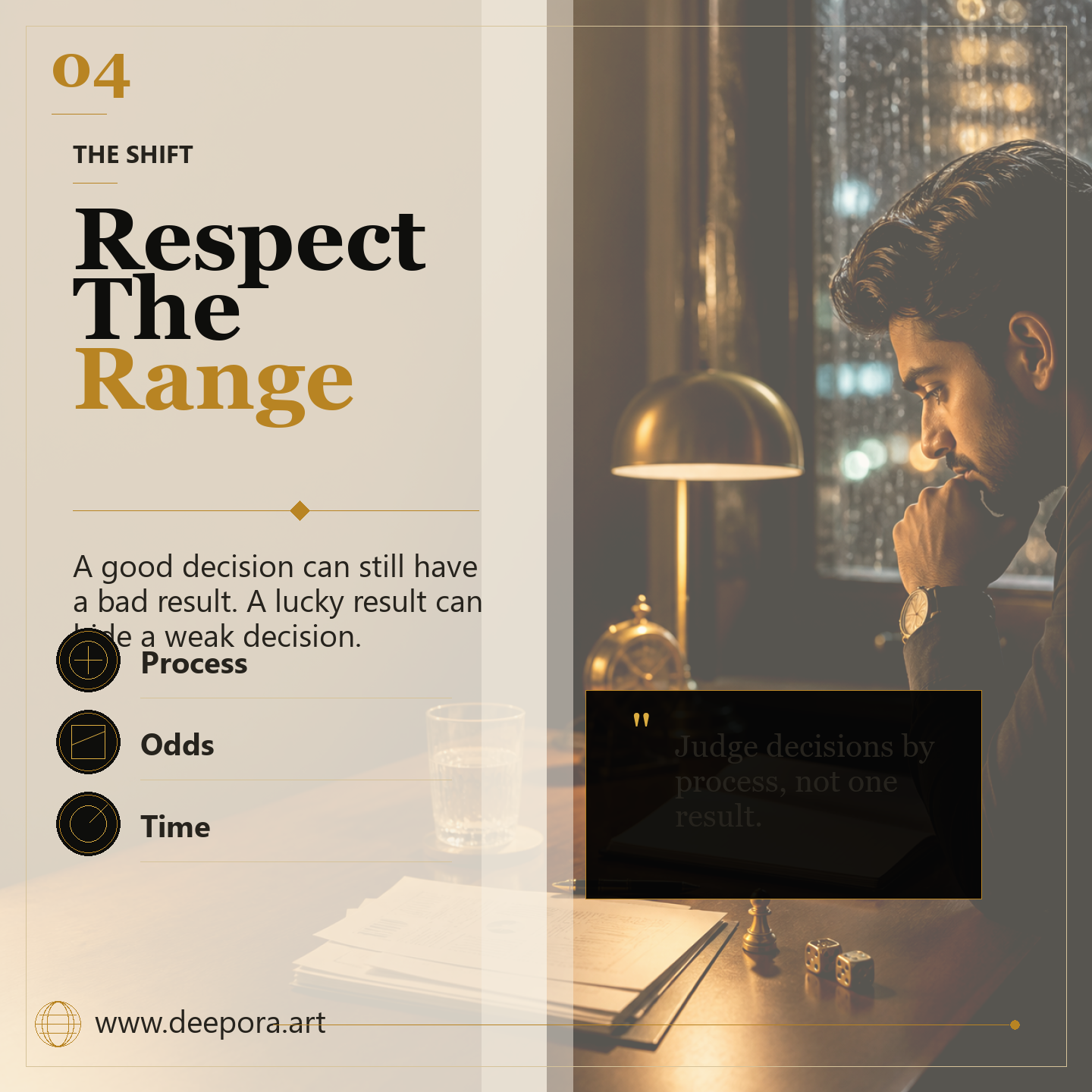
4. Judge your own decisions by process
A good process can still lose once. A bad process can still win once. Look for repeatability, not just a screenshot of profit.
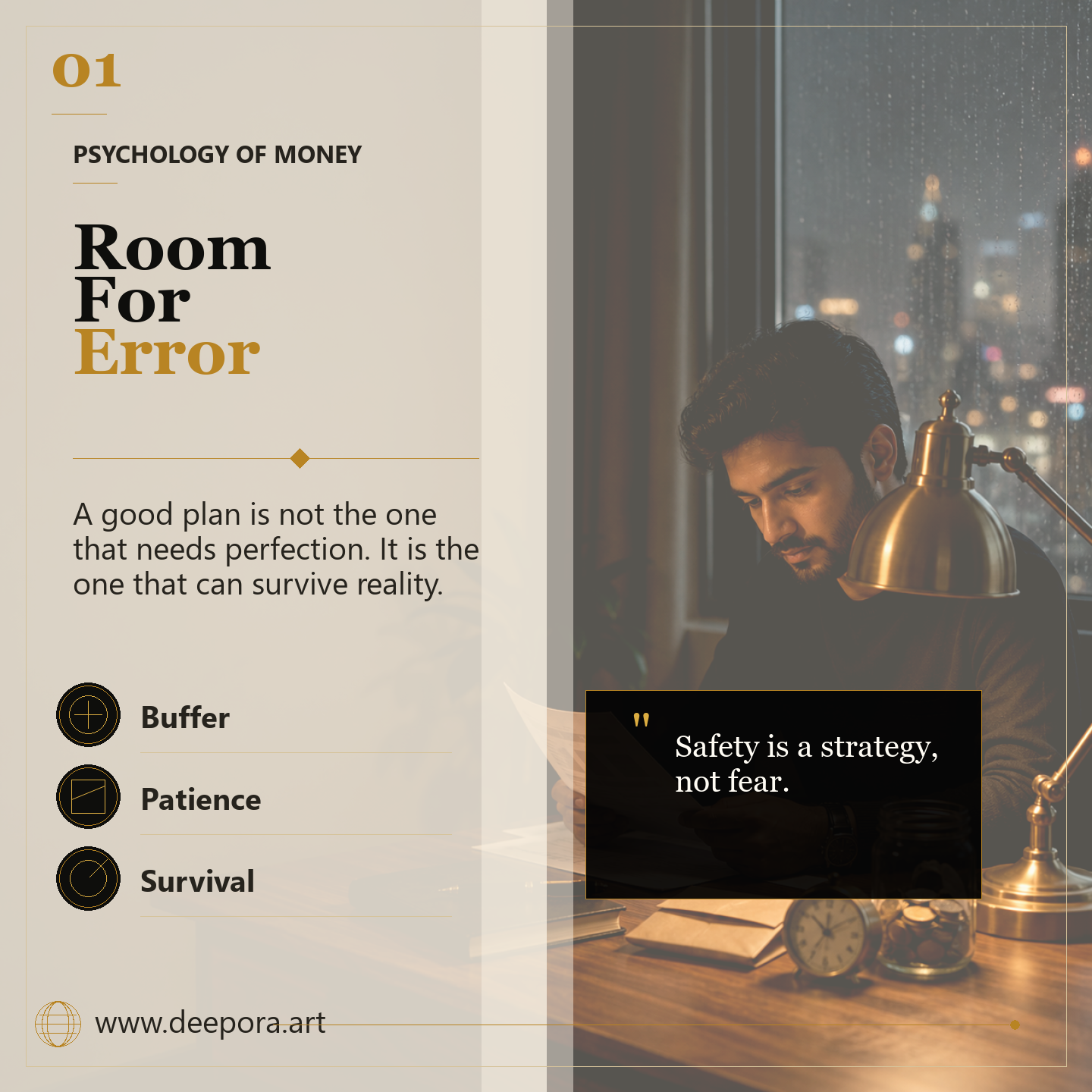
5. Build a margin of safety
Risk is what remains after you think you have thought of everything. A cash buffer, low debt, and small bets give your life room to breathe.
6. Do not let one story become your entire worldview
One founder, one investor, one friend, one creator, or one mistake should not define the full rulebook. Study many cases before forming strong beliefs.
7. Avoid fragile confidence
If your confidence depends on everything going perfectly, it is not confidence. It is a debt to luck.
8. Remember that time changes the scoreboard
Some people look smart for one year and foolish after five. Some people look slow for one year and wise after ten. Money rewards survival.
9. Be careful with advice from people who cannot see your risk
A person online can say, "Go all in." They do not pay your rent, protect your parents, or carry your anxiety. Advice must be filtered through your real life.
10. Use luck as a reason for gratitude, not guilt
If life has helped you, admit it. That does not erase your effort. It makes your success more honest and your decisions more compassionate.
Practical Action Steps
Here is how to use this lesson today, not only admire it.
- Write your last big money decision. A purchase, investment, job switch, business bet, or debt choice.
- List what was in your control. Research, savings, patience, negotiation, preparation.
- List what was outside your control. Timing, market, family support, health, emergency, network.
- Name the hidden downside. What could have broken the decision if luck moved against you?
- Add one margin of safety. More cash, less debt, smaller bet, slower timeline, second income, or stronger skill.
Do this before you copy anyone's success story. Do it before you judge your own failure too harshly.

Internal Links: Continue The Money Cluster
If this lesson helped, read these next:
- Wealth Is What You Do Not See - why quiet money can buy real freedom.
- The Enough Lesson - how to stop ambition from becoming a trap.
- Getting Rich vs Staying Rich - why survival is the most underrated money skill.
- Assets vs Liabilities - a practical money foundation from the original Deepora library.
FAQs
Is success mostly luck?
No. Success is rarely only luck. Skill, preparation, discipline, and persistence matter deeply. The lesson is that luck can amplify or block those efforts, so wise people stay humble and build resilient systems.
How do I know if my result came from skill or luck?
You cannot know perfectly from one result. Look at repeated decisions over time. If the process works across many situations, skill is more likely. If the win depended on one perfect moment, luck may have played a larger role.
Should I avoid risk completely?
No. Avoiding every risk also has risk: missed growth, low learning, and lost opportunities. The goal is not zero risk. The goal is risk you can survive.
What is the best daily habit for this lesson?
Before any major decision, ask: "If this goes wrong, what protects me?" That one question can save years of stress.
Reflection Prompt
Think of one person whose success makes you feel behind. What part of their story do you not know?
Now think of one failure you still blame yourself for. What part may have been timing, context, or hidden risk?
Write both answers honestly. This exercise does not remove responsibility. It adds truth.
Final Deepora Lesson
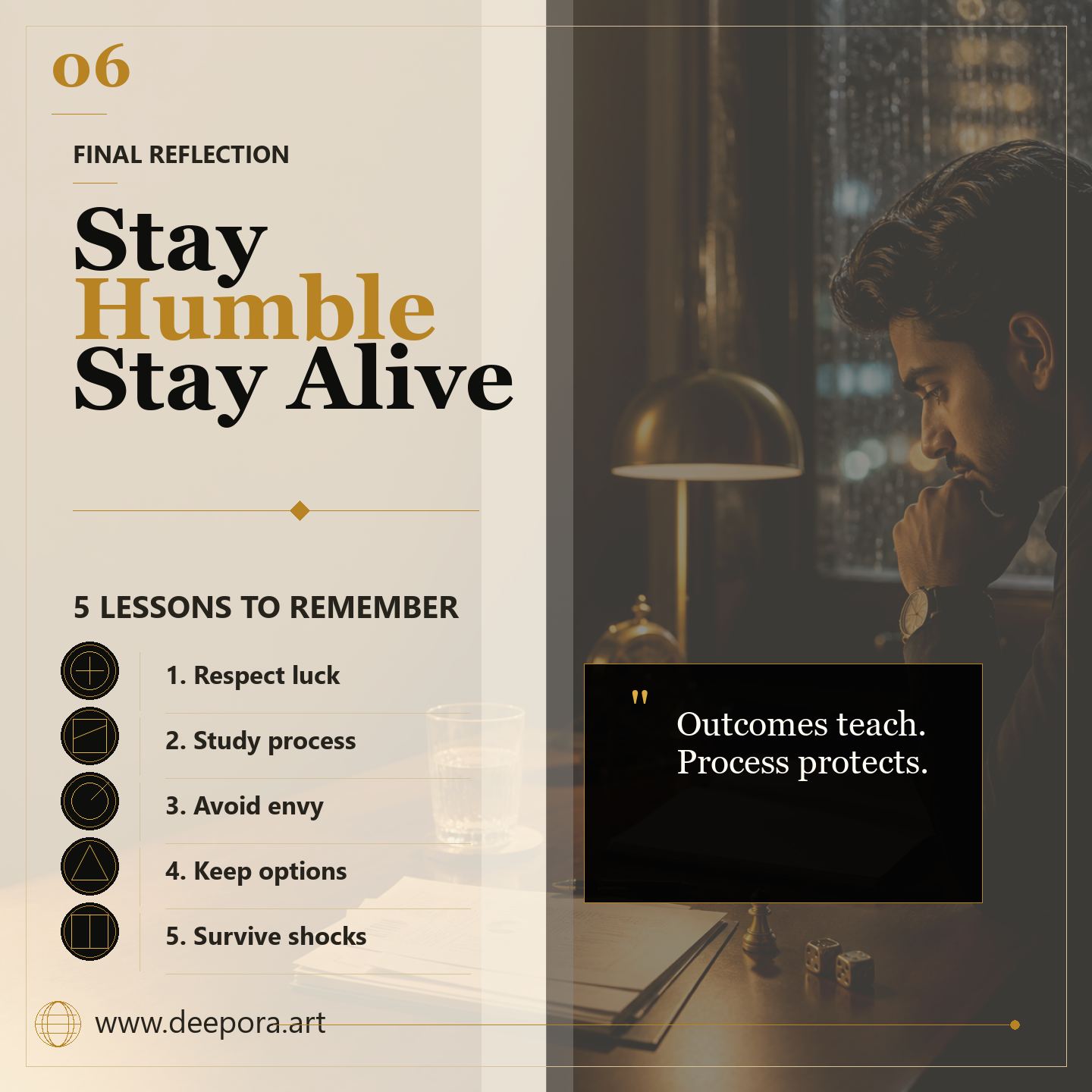
Raghav's loss did not make him a fool. It made him a student.
He stopped asking, "Which winner should I copy?" and started asking, "Which process can I repeat without destroying my life?" He built a cash buffer. He reduced debt. He made smaller bets. He read more slowly. He listened to success stories with respect, but not blind worship.
That is the real lesson of risk and luck.
Do not use success to feed ego. Do not use failure to destroy yourself. Use both to study the process.
Money rewards people who can survive long enough for skill, patience, and time to work together.
Source and credit: This Deepora article is inspired by the risk and luck ideas discussed in Morgan Housel's book The Psychology of Money. It is an educational interpretation, not financial advice. Always make money decisions according to your own situation, risk capacity, and professional guidance where needed.
Deepora CTA: Read one lesson. Apply one action. Let knowledge become life.


0 Comments