
At 4:38 p.m., Karan was sitting inside an expensive office, wearing an expensive watch, waiting for permission to leave.
On paper, his life had improved. His salary had doubled in four years. His designation sounded better. His phone was newer. His apartment was larger. People in his family used his job title as proof that things were going well.
But every evening, when the office lights stayed on and his calendar filled with meetings he did not choose, Karan felt a private question rising inside him: If I earn more but own less of my day, am I actually wealthier?
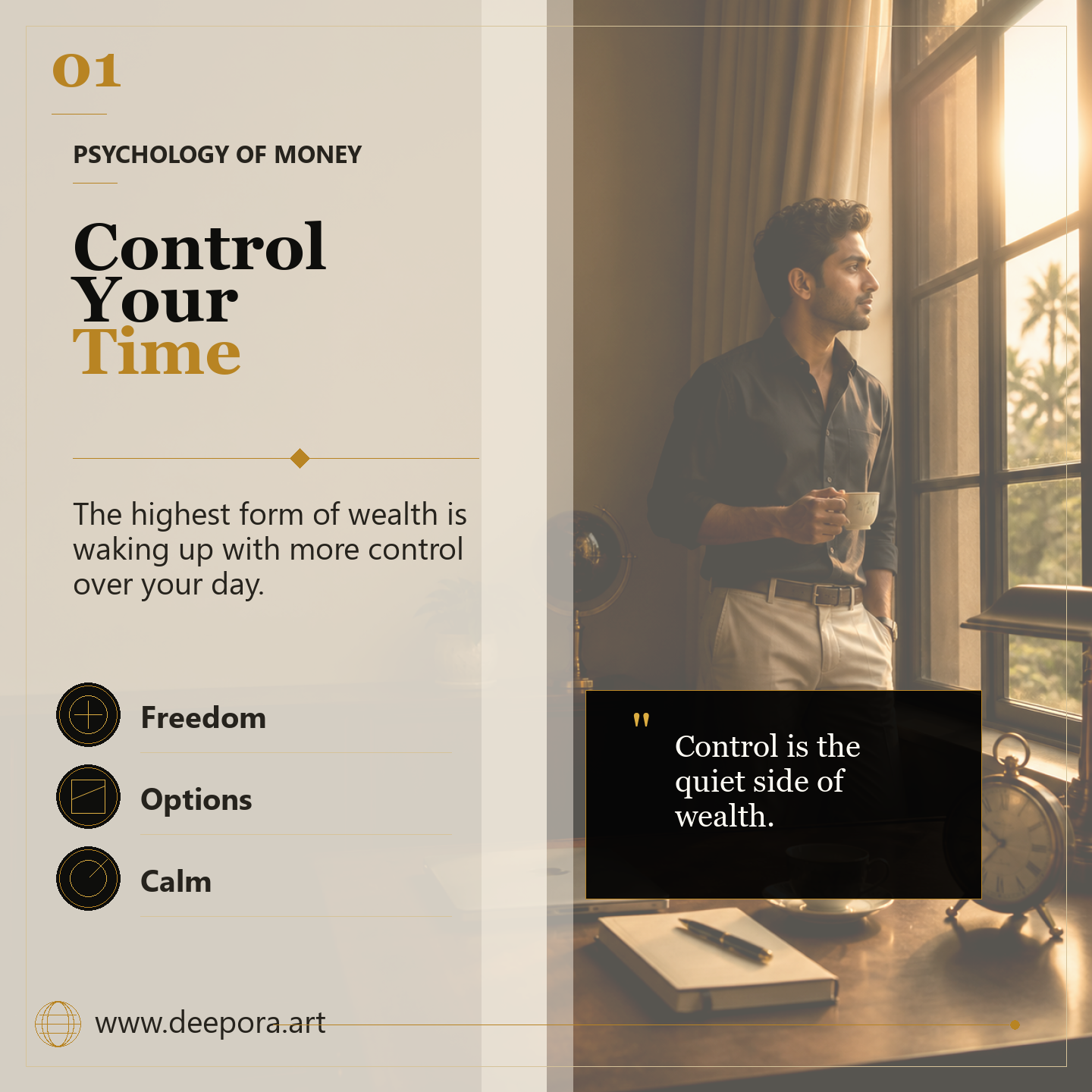
That question is the centre of one of the most important lessons from The Psychology of Money by Morgan Housel: the highest form of wealth is the ability to control your time.
This is not a motivational line. It is a hard financial truth. Money is useful because it can create options. It can let you leave a bad room, say no to a bad client, survive a job transition, help family without panic, rest without guilt, and choose work that does not break your life.
The Real Meaning Of Wealth
Most people measure wealth with visible signals: income, car, house, travel, gadgets, clothes, status. These things are easy to see, so the mind treats them as proof.
But Deepora's view is stricter: wealth is not only what you can buy. Wealth is what you no longer have to tolerate.
| Visible wealth | Real control |
|---|---|
| A better title | The ability to refuse work that destroys health |
| A larger income | A lower dependence on one salary |
| A nicer lifestyle | Freedom from fixed costs that trap you |
| More purchases | More calm, choices, and recovery time |
Karan had income, but not control. His money was entering his account and leaving through obligations: rent, loans, upgrades, subscriptions, social pressure, and the silent cost of proving that he was doing well.
That is why a bigger salary can still feel poor. If every rupee is already assigned to impress someone or maintain a fragile lifestyle, the number may rise while freedom falls.
Money Buys Choice Before It Buys Luxury
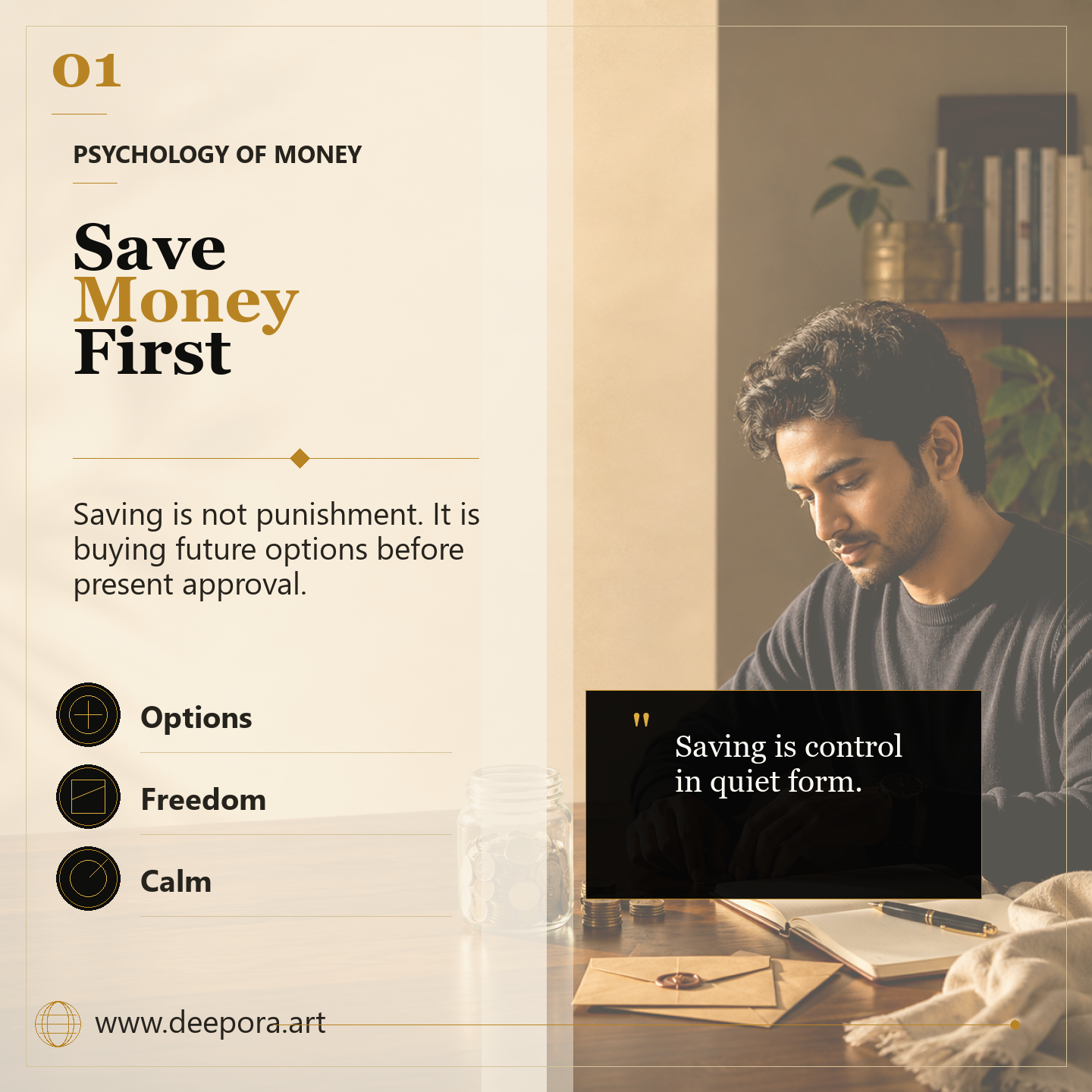
The most useful money is not always the money you spend. Often, it is the money you keep because it gives you choices.
A cash buffer gives you the choice to wait for better work. Low debt gives you the choice to take less pressure. Useful skills give you the choice to negotiate. Simple living gives you the choice to walk away from status games.
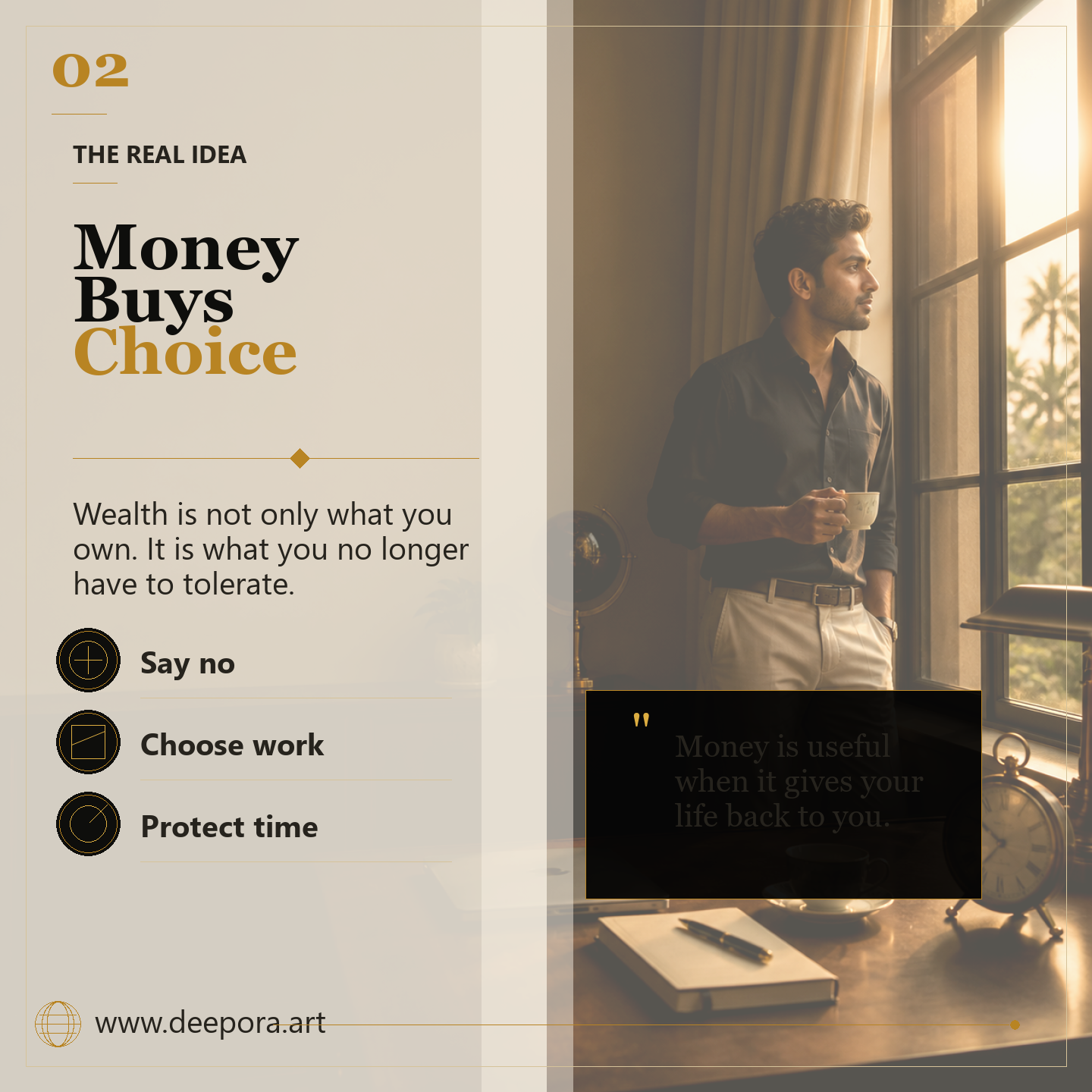
This is why control over time is a better financial target than looking rich. Looking rich asks, "What can I show?" Control asks, "What can I choose?"
| If your goal is status | If your goal is control |
|---|---|
| You upgrade quickly | You build a buffer first |
| You compare constantly | You define enough clearly |
| You accept every pressure | You protect your calendar |
| You buy applause | You buy optionality |
The Trap: Income Without Freedom
Karan's problem was not that he worked hard. Hard work is not the enemy. The problem was that his financial life gave him no room to choose.
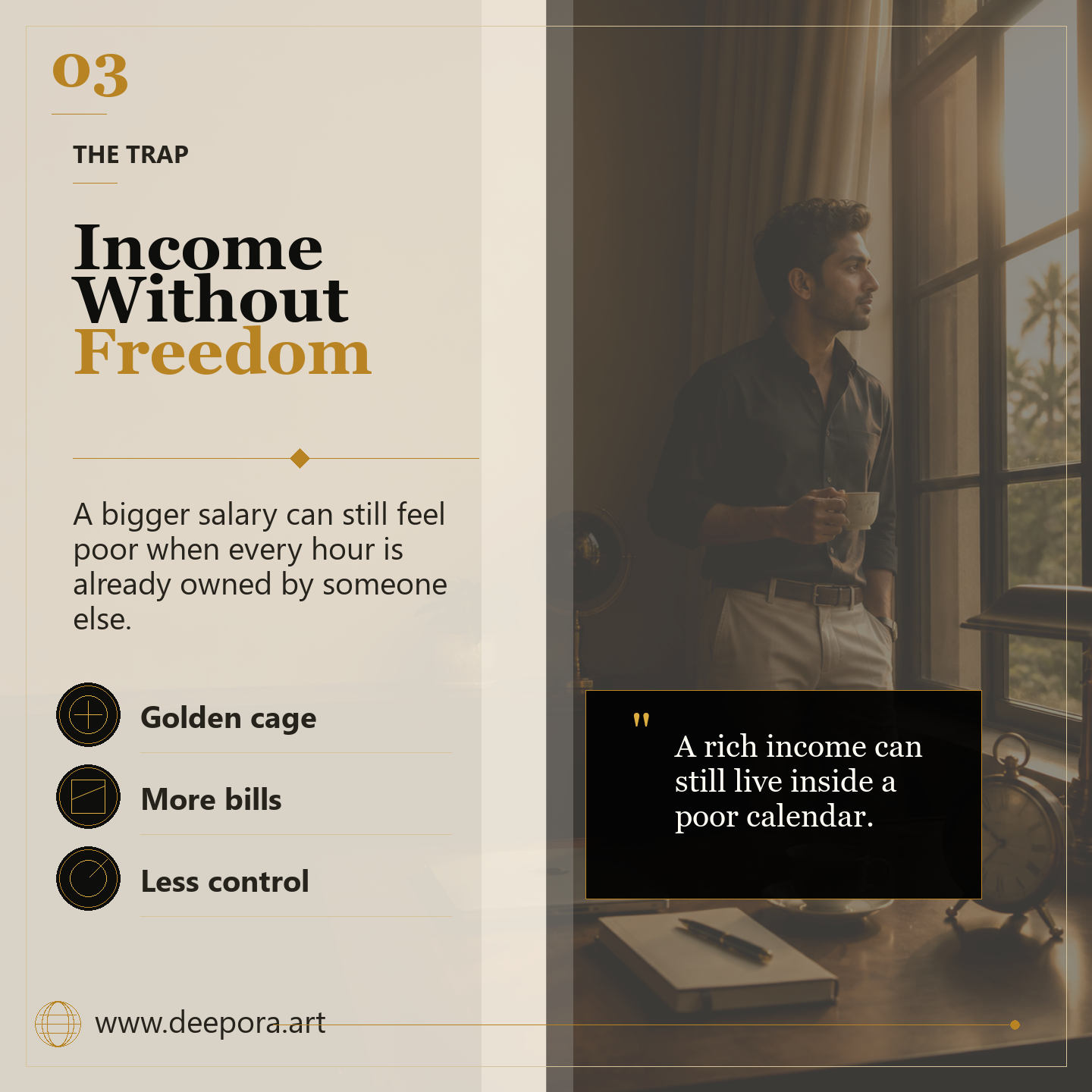
Every raise became a new payment. Every bonus became a new upgrade. Every upgrade became a new minimum standard. The lifestyle that was supposed to celebrate success slowly became a cage that required constant income to maintain.
This is the quiet trap: income can increase while optionality decreases.
10 Lessons From The Control Your Time Lesson
1. Money should reduce pressure, not only increase lifestyle
If every raise becomes a new bill, your income grows but your freedom does not.
2. The best purchase may be a smaller obligation
Paying down debt, cutting fixed costs, and simplifying commitments can buy more peace than another visible upgrade.
3. Cash is not lazy when it buys patience
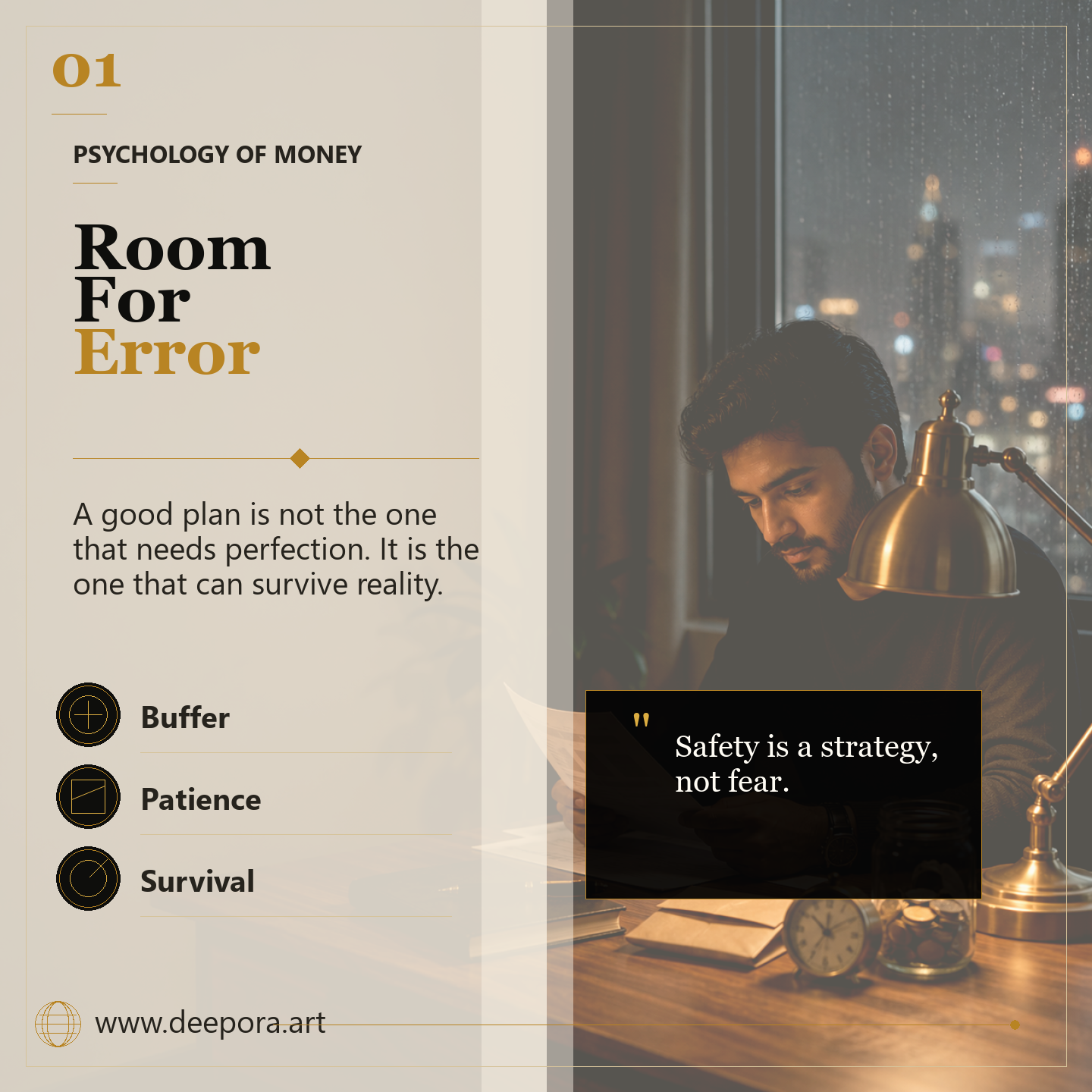
A buffer lets you avoid desperate decisions. Patience is a financial asset.
4. Optionality beats objects
Objects impress people for a moment. Options protect your life for years.
5. High income is weak if expenses rise faster
The gap between earning and spending is where control is built.
6. Do not let status rent your future
Many purchases look like ownership but behave like pressure because they demand future income.
7. Protect attention as seriously as money
If your money grows but your attention is constantly sold, your life may still feel poor.
8. Freedom has to be designed
It rarely appears by accident. You build it through margins, boundaries, skills, and simpler commitments.
9. Ambition should serve your life
Ambition is useful when it expands choice. It becomes dangerous when it removes all rest, health, and family time.
10. Real wealth is quiet
The ability to wake up without panic may look boring from outside, but it is one of the strongest financial outcomes.
Deepora Framework: The Time-Control Scorecard
Use this before chasing the next upgrade:
| Question | Why it matters |
|---|---|
| Can I survive three quiet months? | Buffer creates patience. |
| Can I say no to one bad opportunity? | Choice proves control. |
| Are fixed costs growing faster than income? | Expenses can trap time. |
| Am I buying status or reducing pressure? | The motive decides the result. |
| Does this purchase give future me more choice? | Good money decisions expand optionality. |
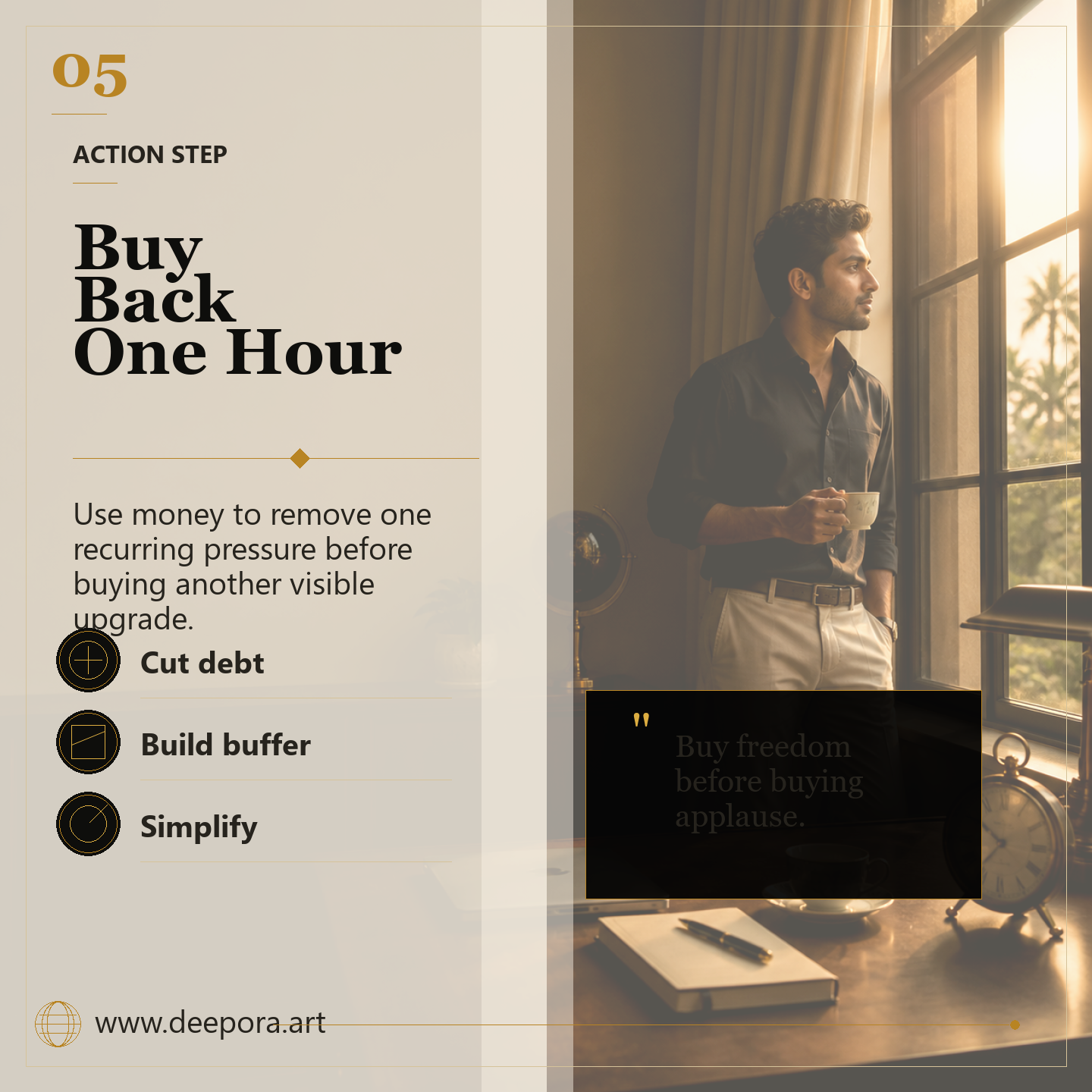
Action Steps: Buy Back One Hour
- Find one recurring pressure. A loan, subscription, obligation, commute, or avoidable task.
- Calculate its time cost. How many work hours does it demand every month?
- Remove or reduce one piece. Cancel, renegotiate, pay down, simplify, or automate.
- Build a small buffer. Start with enough to protect one month, then grow it slowly.
- Use the freed time deliberately. Health, skill, family, rest, or deep work.
Internal Links: Continue The Money Cluster
- Wealth Is What You Do Not See - why invisible assets buy real freedom.
- The Enough Lesson - how to define the line that protects peace.
- The Compounding Lesson - why time rewards protected consistency.
- Assets vs Liabilities - the original Deepora money foundation.
FAQs
What is the highest form of wealth according to The Psychology of Money?
The highest form of wealth is control over your time: the ability to choose what you do, when you do it, who you do it with, and what you can refuse.
Can I have high income but low wealth?
Yes. If high income is matched by high fixed costs, debt, stress, and no savings, the person may look successful but have very little control.
How does money buy freedom?
Money buys freedom by creating a buffer, reducing dependence, increasing options, and giving you the ability to wait, negotiate, rest, or leave.
What is one practical step today?
Use money to remove one recurring pressure before buying another visible upgrade.
Reflection Prompt
Where has your income increased but your freedom decreased?
Write one thing you can simplify this month so future you owns more of the day.
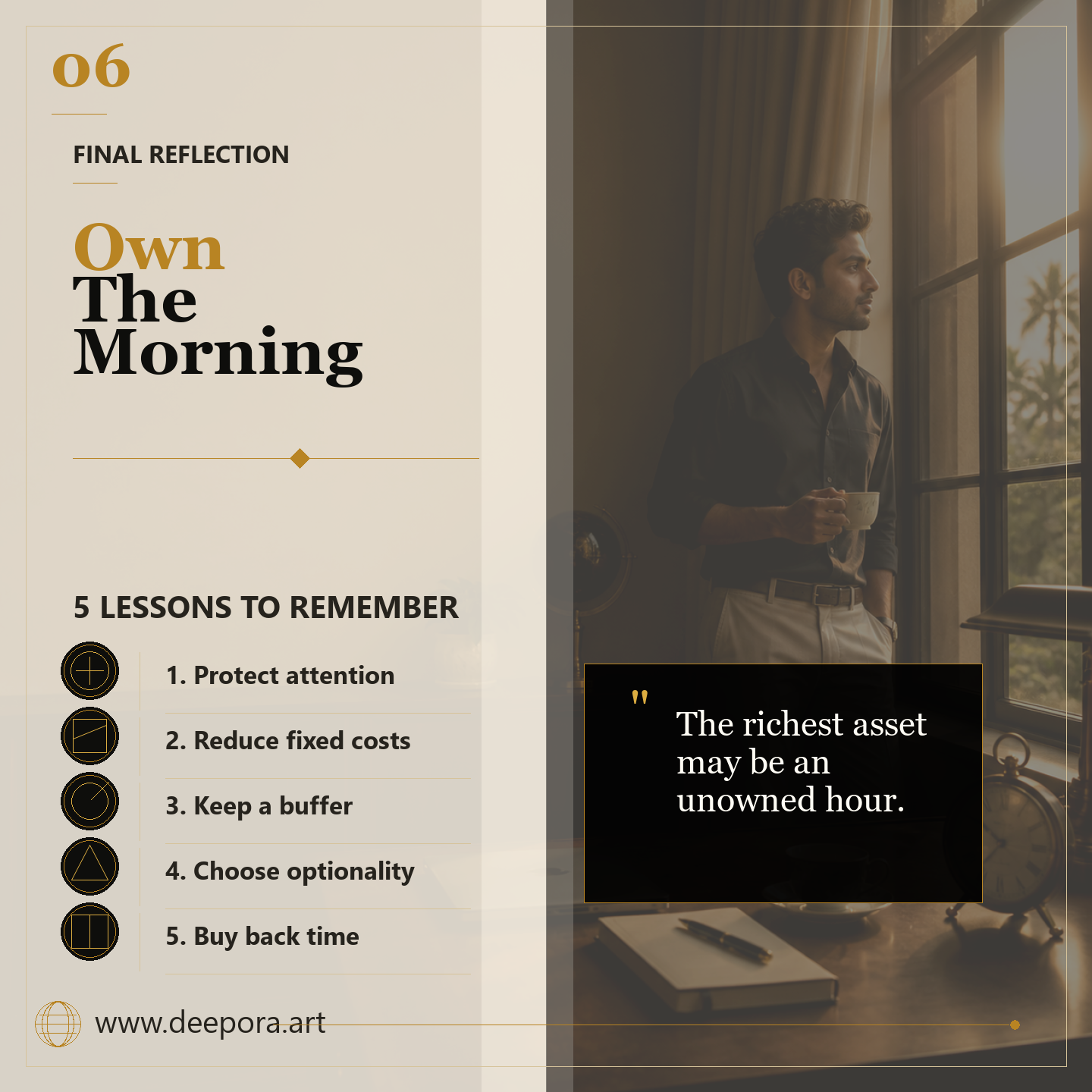
Final Deepora Lesson
Karan did not need to hate ambition. He needed to make ambition serve the right master.
Money is not only for buying things. Money is for buying breathing room. It is for buying the ability to leave early when health needs attention, pause when family needs presence, wait when the job market is bad, and choose work without desperation.
The real meaning of wealth is not owning everything. It is not being owned by everything.
Source and credit: This Deepora article is inspired by the control-over-time and wealth ideas discussed in Morgan Housel's book The Psychology of Money. It is an educational interpretation, not financial advice. Always make money decisions according to your own situation, risk capacity, and professional guidance where needed.
Deepora CTA: Read one lesson. Apply one action. Let knowledge become life.
0 Comments