
Arjun's friends thought he was behind.
They had upgraded phones, louder cars, weekend photos, expensive dinners, and the kind of lifestyle that made success visible from a distance. Arjun drove the same modest car, wore simple clothes, and still lived in a rented flat near his office. At reunions, people joked that he was "too careful" with money.
What they did not see was the part that mattered: no credit card debt, six months of expenses saved, a growing investment account, and the freedom to reject work that disrespected his health. His wealth was not loud. It was hidden inside options.
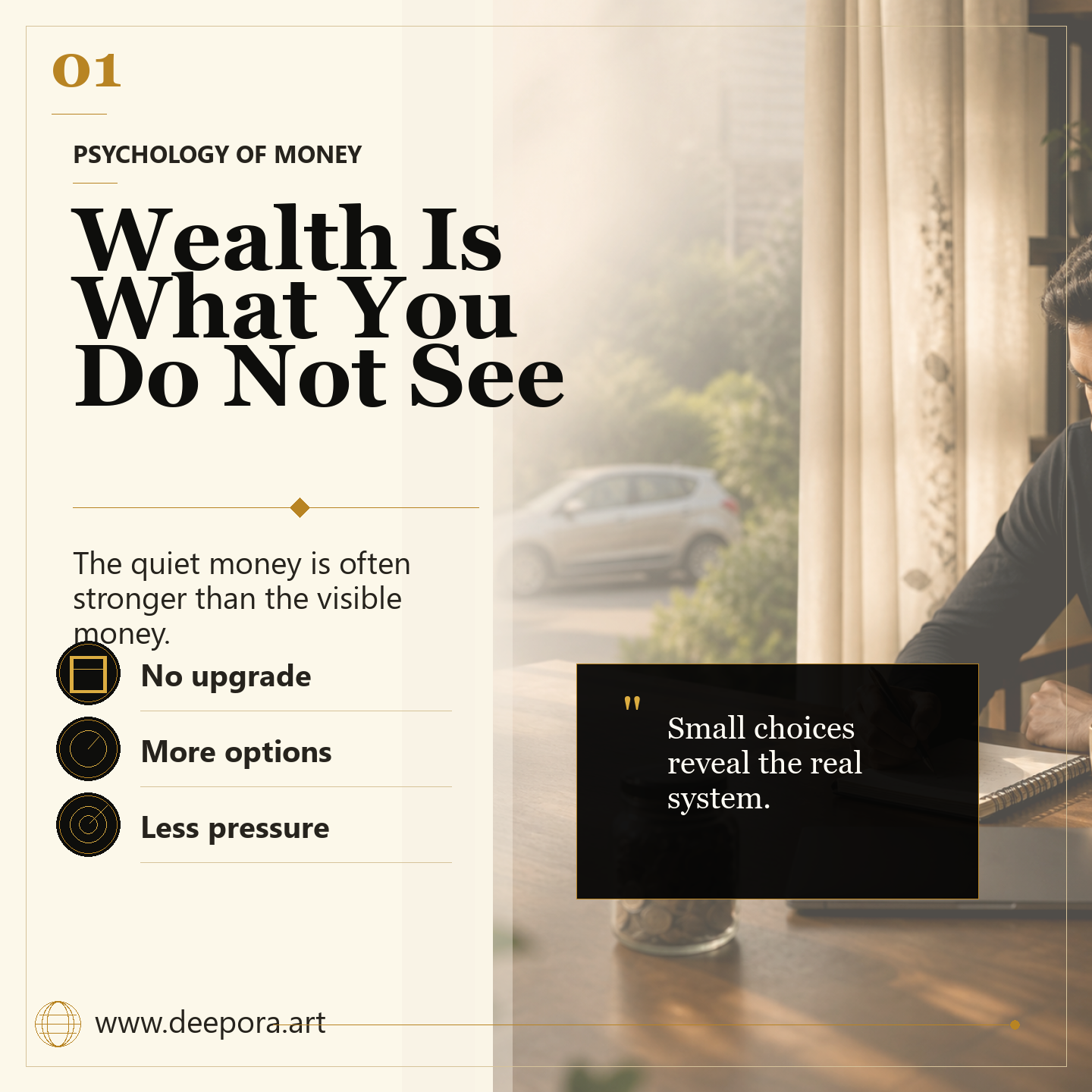
That is one of the strongest lessons from The Psychology of Money: wealth is what you do not see.
What This Story Really Teaches
Visible spending is easy to admire because it gives proof immediately. Hidden wealth is harder to respect because it looks like nothing happened. But the money that stays invested, saved, and unspent quietly buys control over time.
Morgan Housel explains that people often learn about money by watching what others buy. The problem is that purchases show money leaving, not wealth remaining.
Rich-Looking vs Actually Wealthy
| Rich-Looking | Actually Wealthy |
|---|---|
| Needs attention | Buys options |
| Upgrades quickly | Keeps margin |
| Income looks high | Stress stays low |
| Depends on applause | Depends on assets |
10 Lessons About Hidden Wealth
1. Spending is visible, wealth is hidden
A car can show spending, but not net worth.
2. Savings buy breathing room
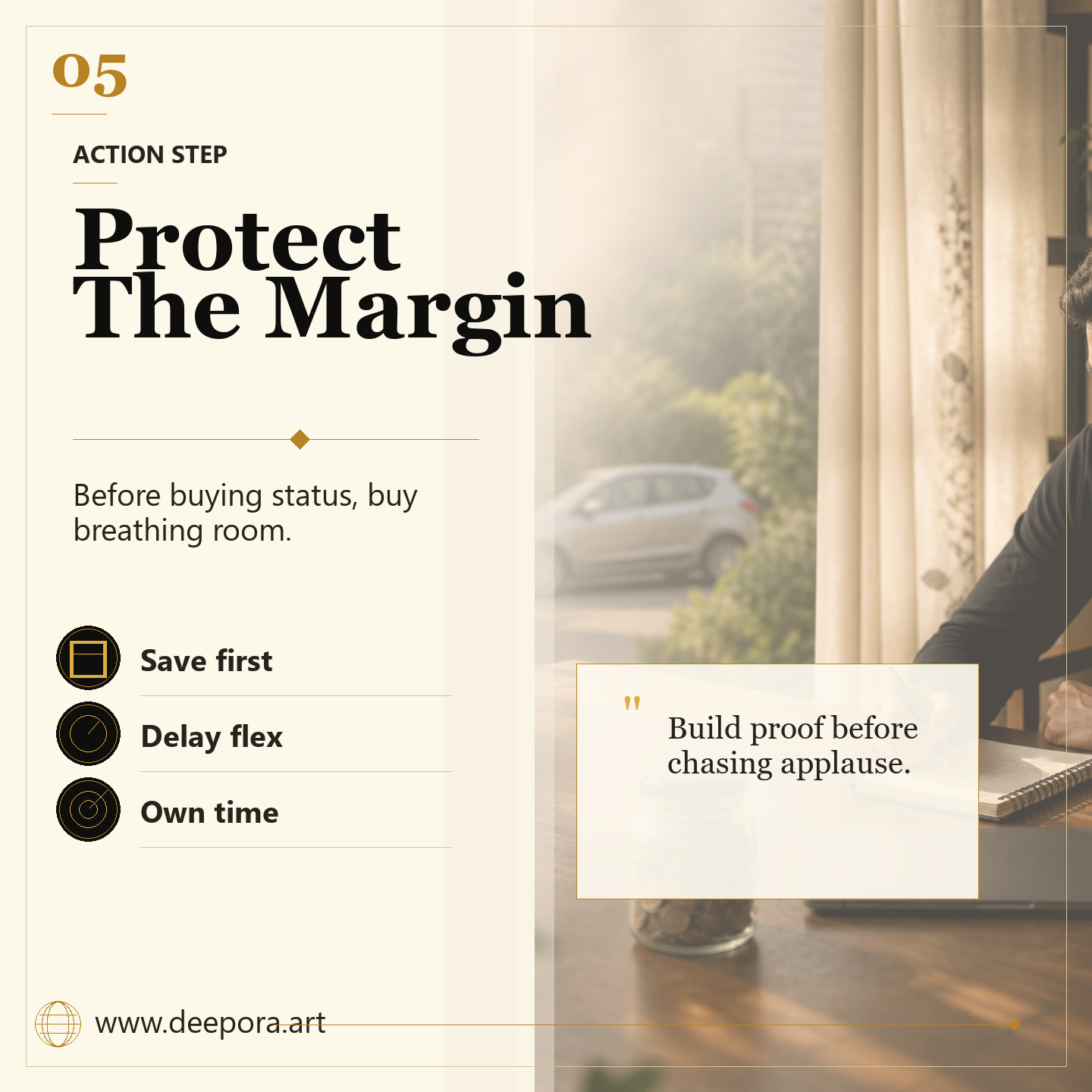
The first job of money is not status. It is reducing panic.
3. Lifestyle inflation eats raises
If every income jump becomes a payment, freedom never grows.
4. Wealth gives you the right to wait
Patience is easier when you are not desperate.
5. The best purchase is control over time
Money becomes powerful when it lets you choose how your days are spent.
6. Quiet money compounds
The money you do not interrupt keeps working.
7. Social comparison is expensive
Buying respect from people who are not paying your bills is a costly game.
8. Margin is underrated
Extra room in your finances protects your mind.
9. You can be wealthy before you look wealthy
The appearance of success often arrives later than the foundation.
10. Freedom beats flex
A quiet life with options is richer than a loud life with pressure.
Action Steps
- Write your monthly income and fixed expenses.
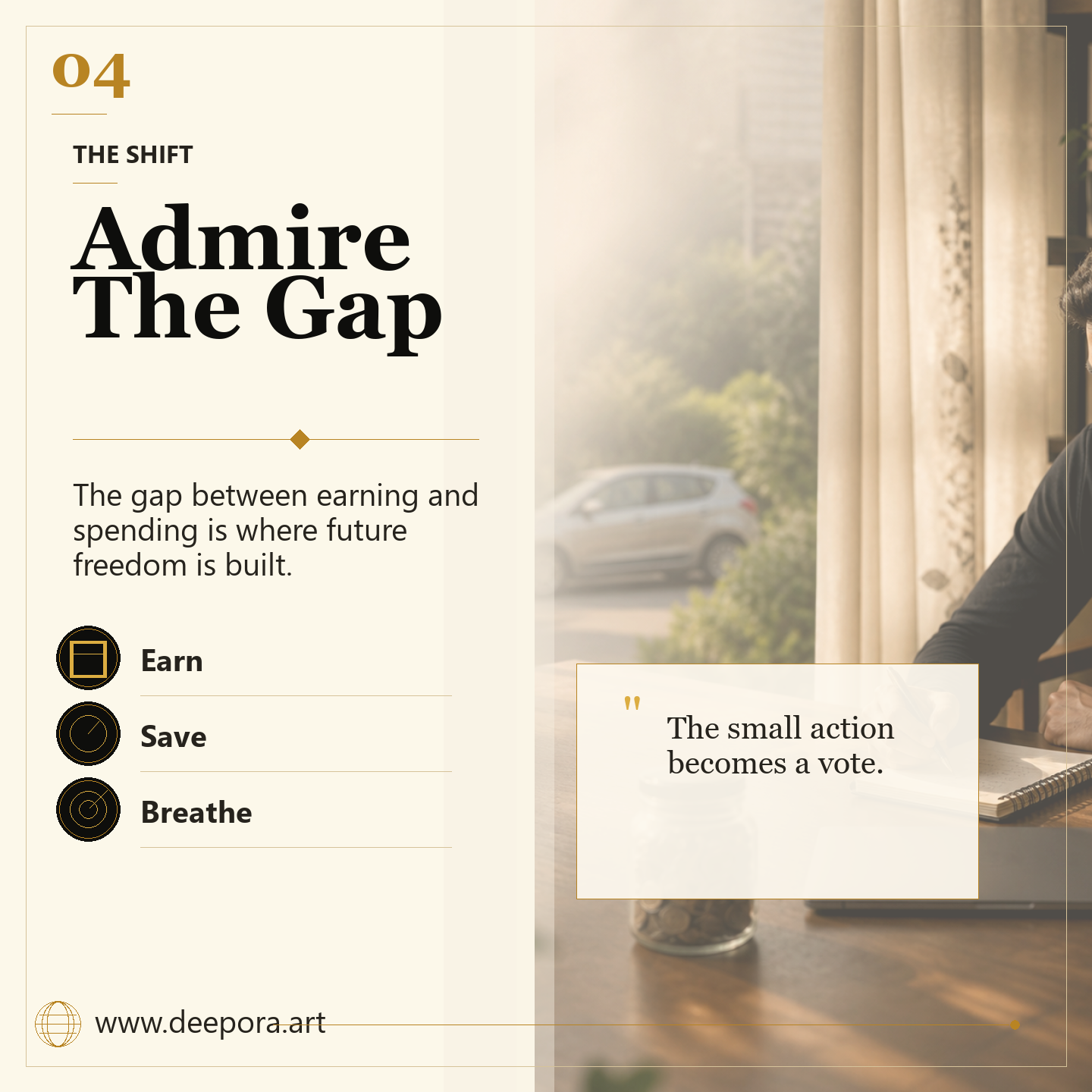
- Calculate the gap that buys future freedom.
- Delay one status purchase for 30 days.
- Automate one saving or investing action.
- Ask what would reduce stress, not just impress others.
Reflection Prompt
Which part of your money life is designed for peace, and which part is designed for display?
Related Deepora Reads
- Money Lessons: Assets, Liabilities, and Wealth Building
- Psychology of Money Lessons
- Atomic Habits Environment Design
Sources and Disclaimer
This Deepora article is an original educational story inspired by The Psychology of Money by Morgan Housel and his public writing at Collaborative Fund. Arjun is fictional. This is educational content, not financial advice.
Conclusion
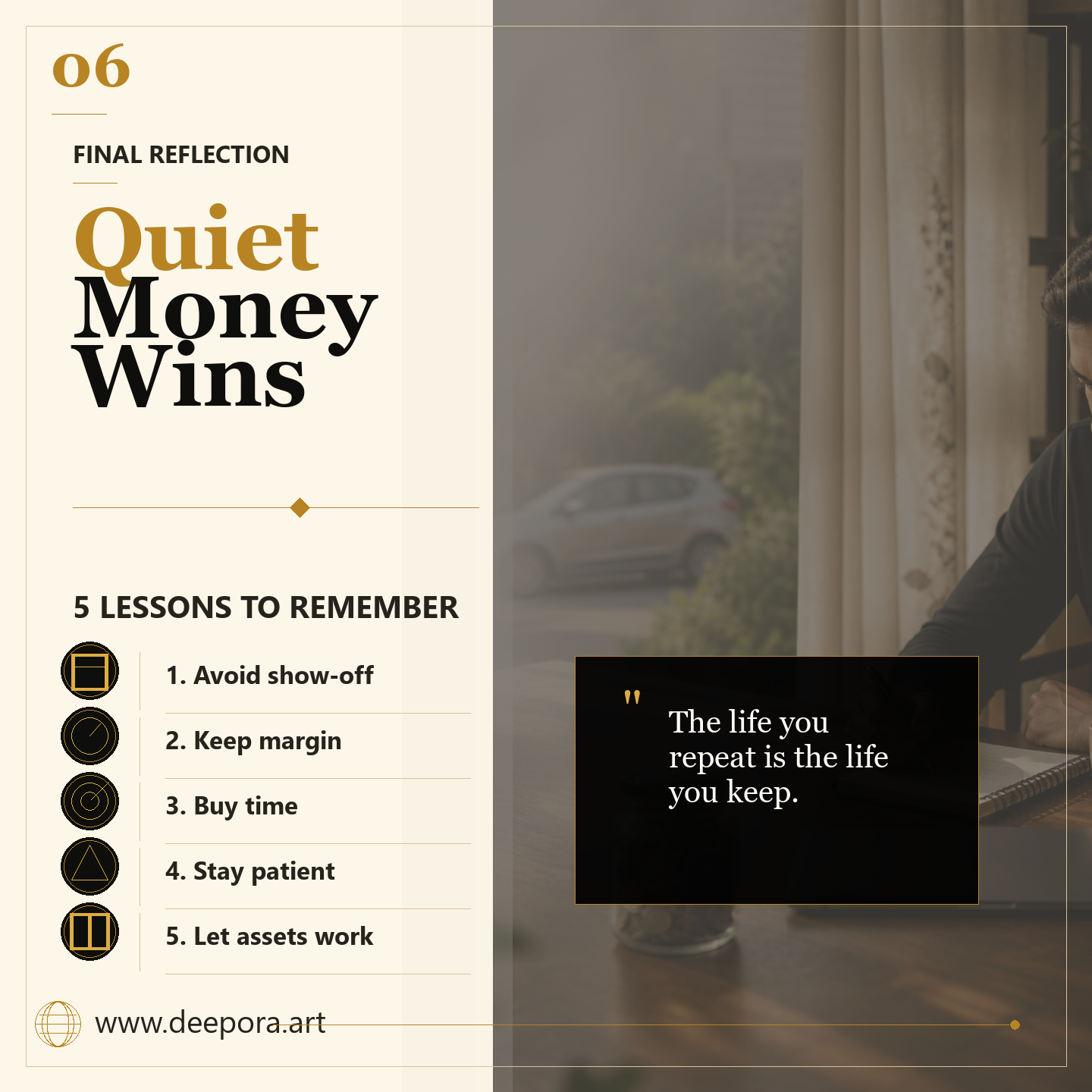
Do not underestimate quiet money. The money no one claps for may be the money that saves your future.
Instagram Carousel Summary



0 Comments