
Rohan had a habit of changing his life on Sundays.
Every few weeks he opened a blank page, wrote the date at the top, and designed a new version of himself. Wake up at 5 AM. Run five kilometers. Read thirty pages. Study for three hours. No junk food. No distractions. No excuses. The plan always looked clean because paper never argues back.
Monday usually went well. Tuesday was acceptable. By Wednesday, life started negotiating. A late work call. A family errand. A tired morning. A message he answered for only two minutes that became forty. By Friday, the plan looked like evidence against him.
He did not simply miss a habit. He missed the person he had promised himself he would become.
That was the part nobody saw. From the outside, Rohan looked lazy. From the inside, he was exhausted by his own seriousness. He wanted to change so badly that every plan he made became heavy. Each new routine carried the weight of proving that this time would be different.
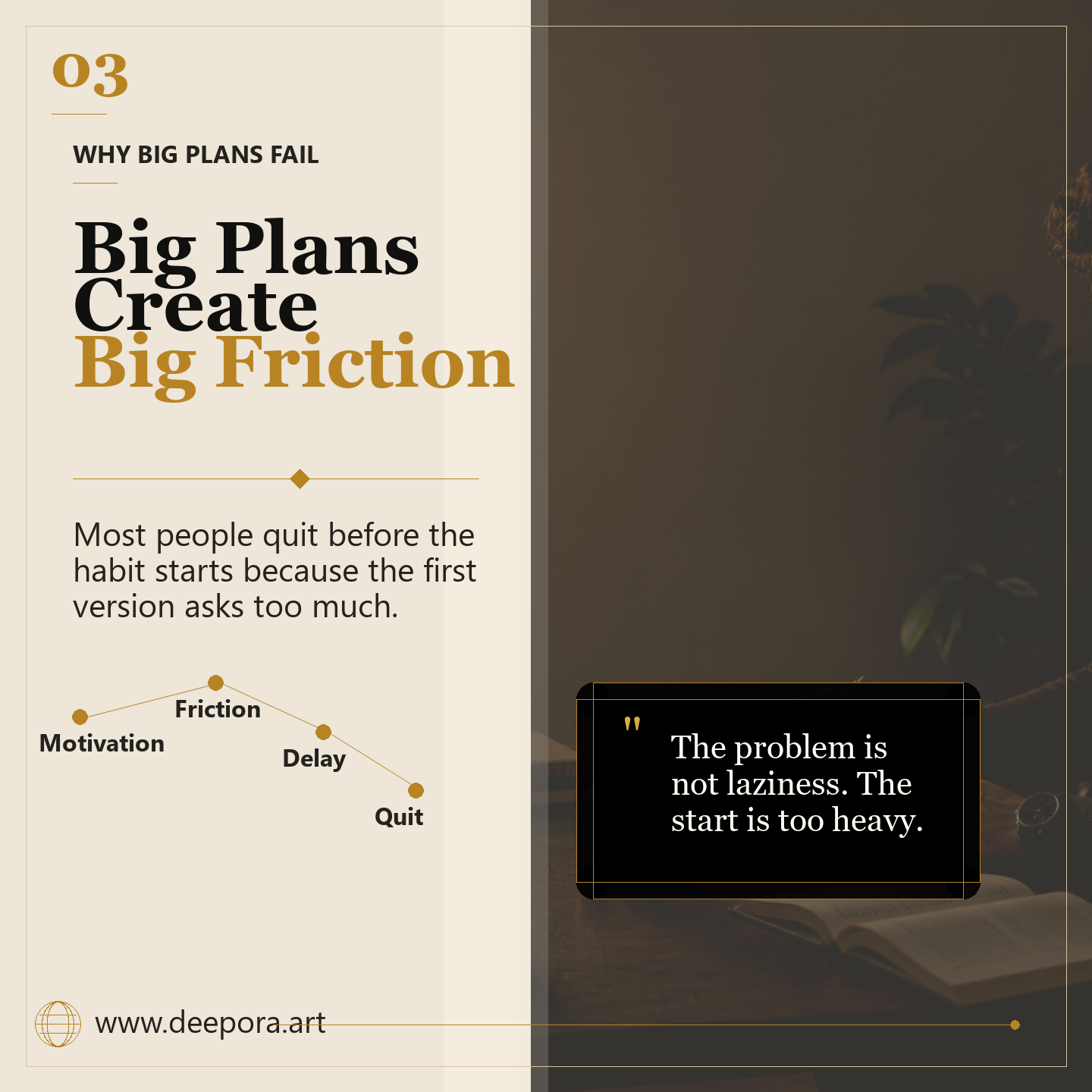
And because the plan was so heavy, starting became the hardest part.
One evening, after another failed week, Rohan sat at his desk with his running shoes beside him and his study notes open. He had promised himself a full workout and two hours of preparation. The room was quiet. The timer on his phone was ready. Nothing was technically stopping him.
Still, he did not move.
That is the strange truth about procrastination. It does not always come from not caring. Sometimes it comes from caring so much that the first step feels like a courtroom. If you start, you have to face the size of the task. If you avoid it, at least the dream remains untouched.
Rohan was not avoiding the work. He was avoiding the emotional weight attached to the work.
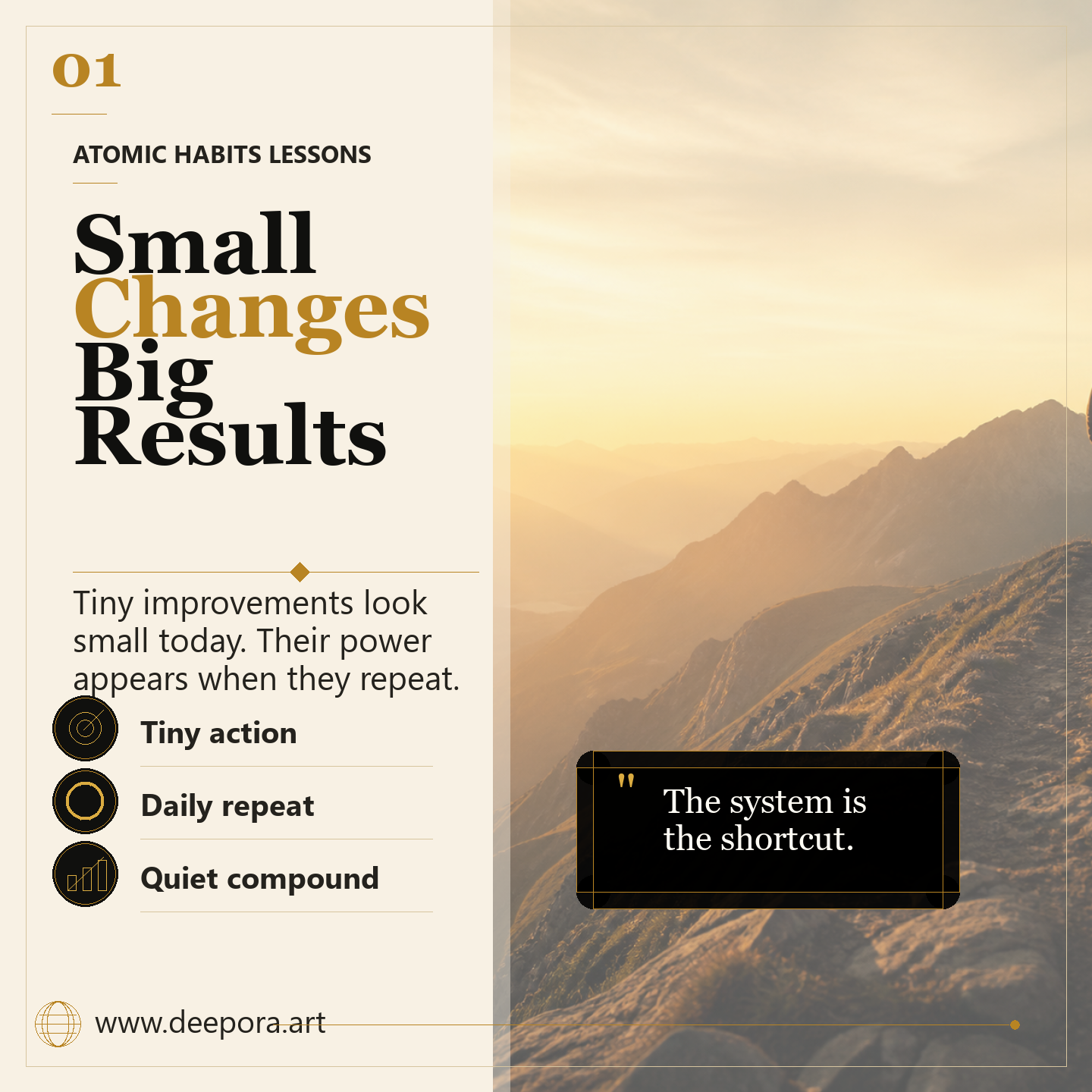
A friend had given him Atomic Habits by James Clear. He had read the first chapters quickly and highlighted the familiar lines about small improvements, identity, and systems. But one idea irritated him because it sounded almost too small to respect: the Two-Minute Rule.
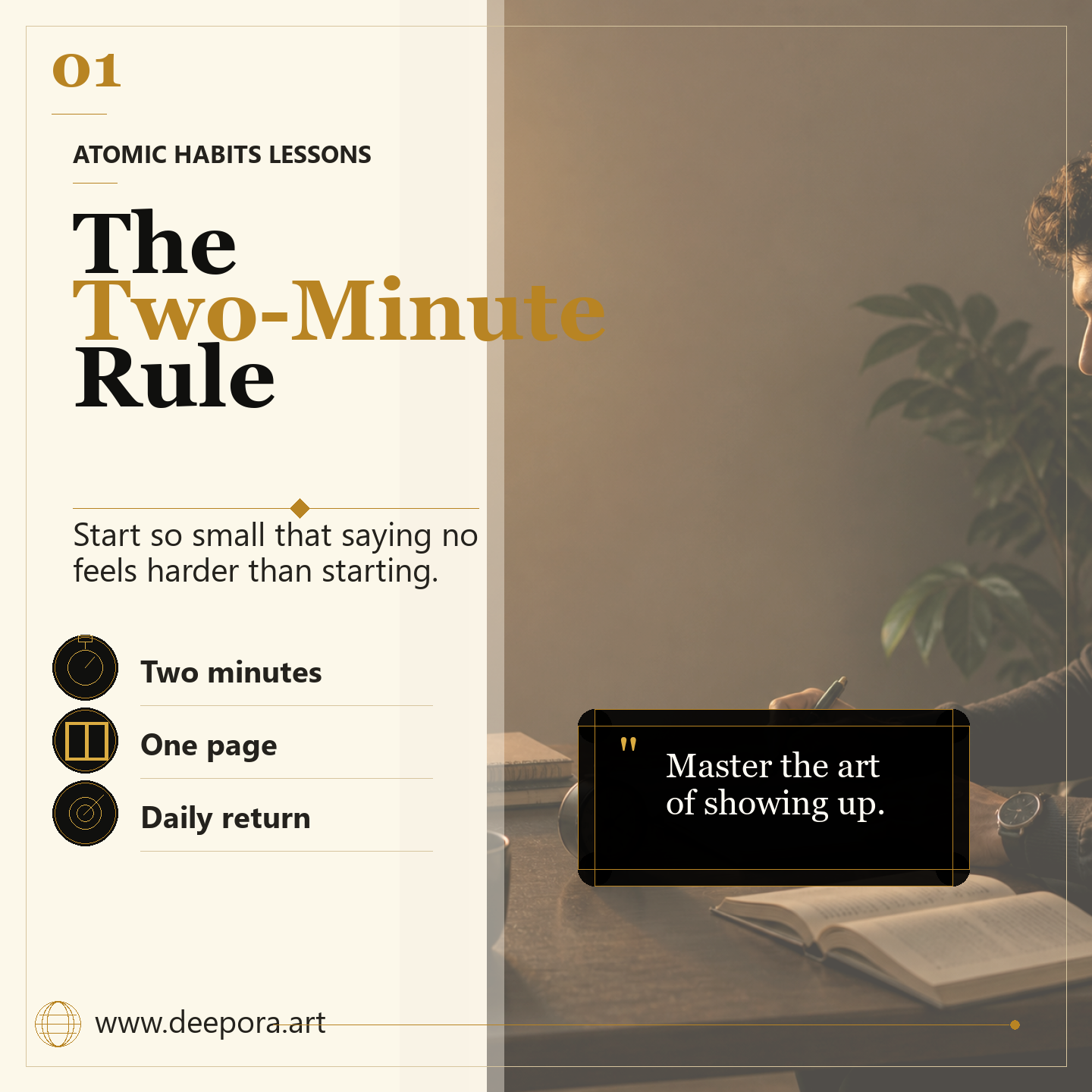
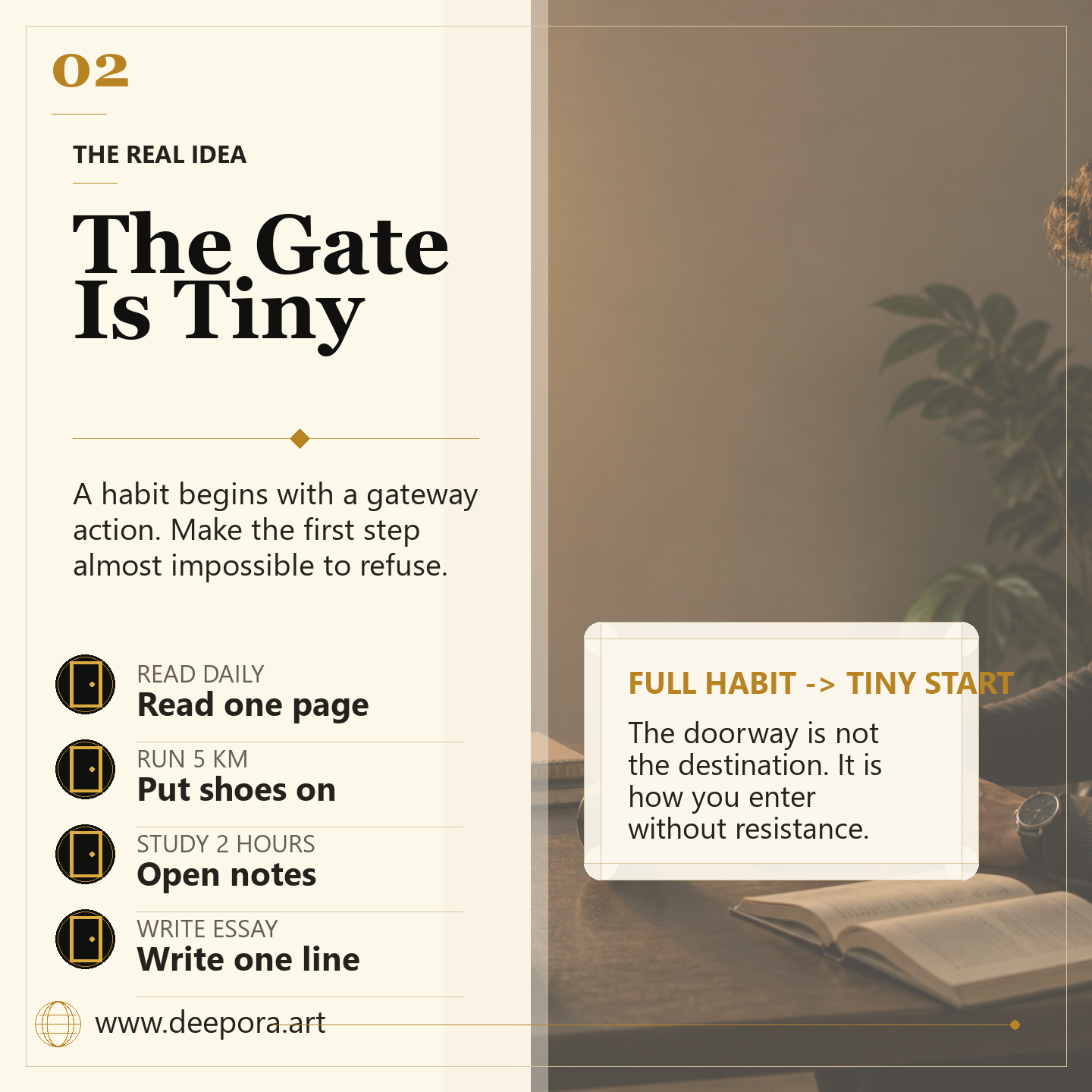
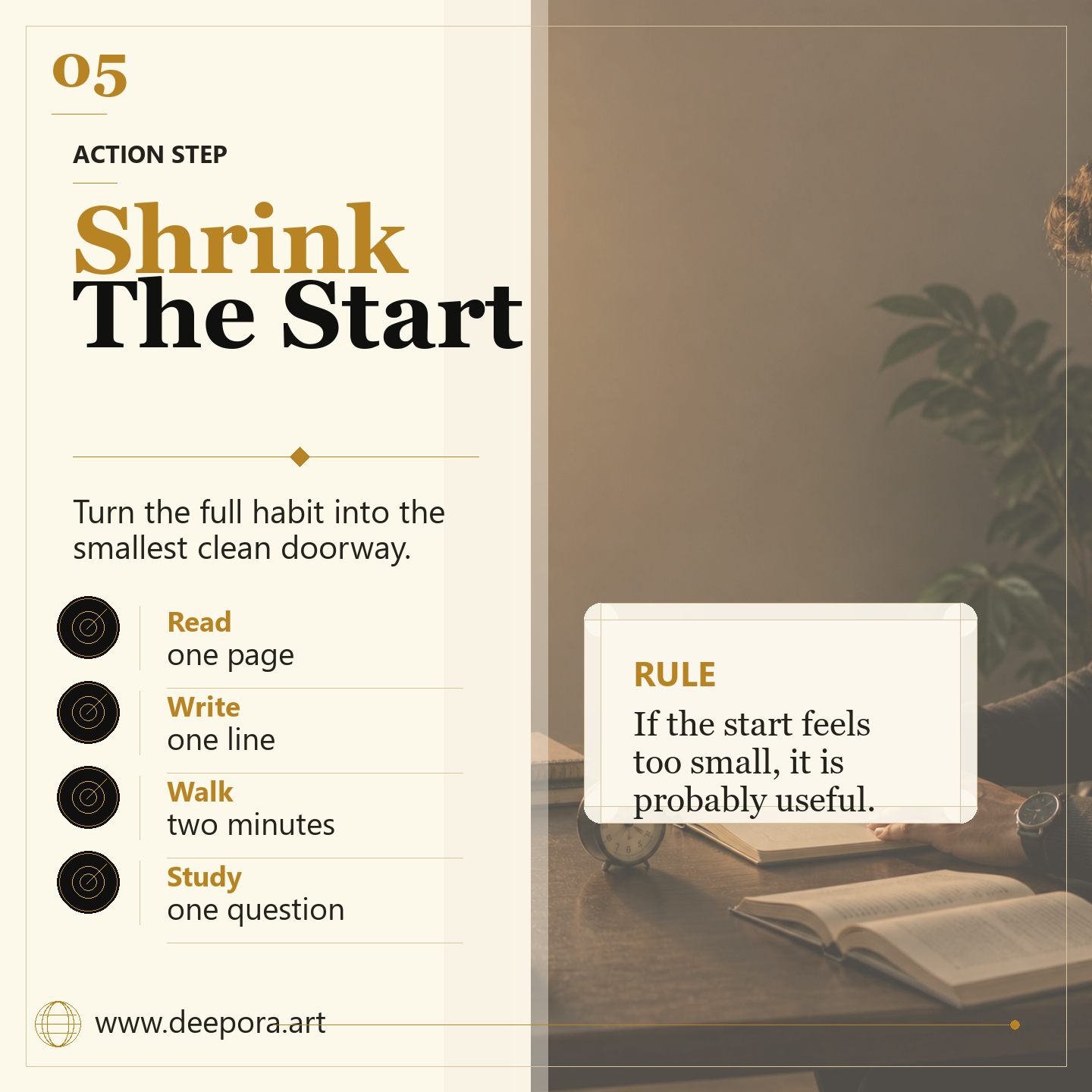
Clear explains the idea simply on his official site: when you start a new habit, it should take less than two minutes. A big habit gets scaled down into a gateway version. Read thirty pages becomes read one page. Run five kilometers becomes put on running shoes. Study for two hours becomes open the notes. The point is not that one page changes your life. The point is that one page changes your relationship with starting.
Read also:
Rohan disliked the idea at first. It felt unserious. He wanted transformation, not tricks. He wanted discipline, not a tiny doorway. But that night, his serious plans had already failed. So he made a deal with himself.
He would study for two minutes. Only two. After that, he was allowed to stop without guilt.
He opened one chapter. Underlined one definition. Wrote one sentence in his notebook. The timer rang before he had built enough resistance to argue. And because stopping after two minutes felt almost silly, he continued for another eight.
Ten minutes of work was not a dramatic victory. Nobody would post about it. Nobody would call it a breakthrough. But for Rohan, it was different from his usual pattern in one important way: he had started on a day when he normally would have quit.
The next morning he did the same thing with running. Not a full run. Not a motivational comeback. He put on his shoes and walked outside for two minutes. The rule was clear: the win was not distance. The win was showing up.
For the first time in months, his habit did not require him to become a new person before starting. It allowed him to become a new person by starting.
What This Story Really Teaches
The Two-Minute Rule is easy to misunderstand because it sounds small. People hear it and think, "How can two minutes matter?" But the rule is not really about time. It is about friction.
Every habit has an entry cost. Sometimes the cost is physical, like putting on shoes or opening a laptop. Often the cost is emotional: fear of failure, boredom, perfectionism, shame from previous attempts, or the feeling that the full task is too large to face. The bigger the first step feels, the easier it becomes to delay.
The Two-Minute Rule lowers the entry cost until the brain stops treating the habit like a threat.
That is why it works. It does not try to win the whole day at once. It wins the doorway. And once the doorway is crossed, the rest of the behavior becomes more available.
The Atomic Habits 2 Minute Rule, Explained Deeply
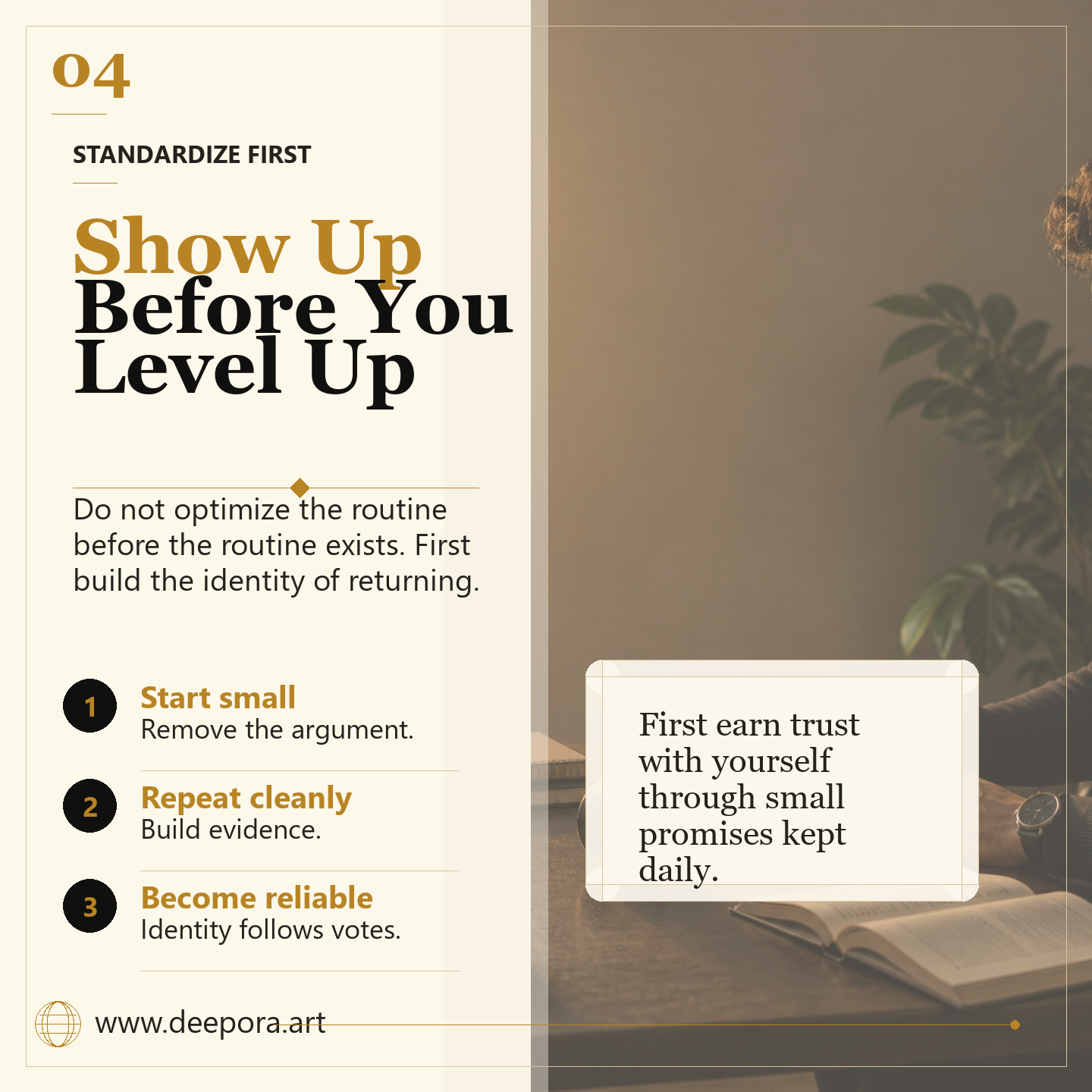
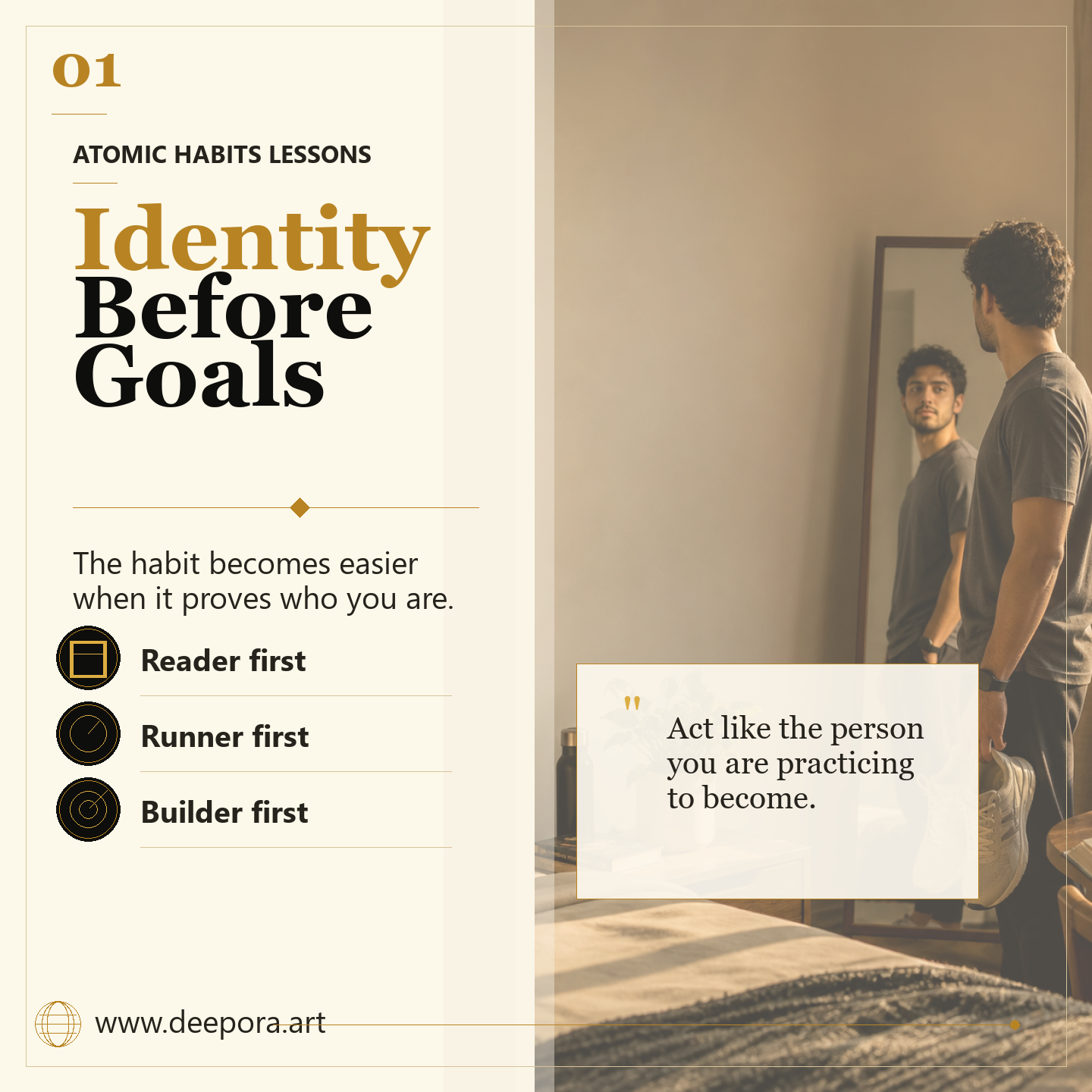
James Clear's broader argument in Atomic Habits is that habits are not just actions. They are evidence. Every repeated behavior casts a small vote for the type of person you believe yourself to be. If you write one line daily, you are casting votes for being a writer. If you open your notes daily, you are casting votes for being a serious learner. If you put on your running shoes daily, you are casting votes for being someone who trains.
The Two-Minute Rule gives you a way to cast those votes without demanding a perfect performance.
This matters because identity does not change through promises. It changes through proof. Most people try to create a huge proof too early. They say, "I will study three hours every day," before they have built the identity of someone who opens the book even on a bad day. They say, "I will run every morning," before they have built the identity of someone who puts on shoes when the mood is missing.
Clear's phrase "standardize before you optimize" captures this perfectly. Before you improve a habit, make it normal. Before you make it impressive, make it repeatable.
Rohan did not need a better productivity system at first. He needed a starting ritual that survived ordinary life.
Full Habit vs Two-Minute Gateway
| Full Habit | Two-Minute Gateway | Why It Works |
|---|---|---|
| Read 30 pages every night | Read one page | The mind stops treating reading like a large commitment. |
| Run five kilometers | Put on running shoes and step outside | The identity of "someone who trains" begins before the workout does. |
| Write 1,000 words | Open the document and write one sentence | The blank page loses power once it is no longer blank. |
| Study for two hours | Open notes and solve one question | The session starts before resistance can build a long argument. |
| Meditate for 20 minutes | Sit down and take five slow breaths | The ritual becomes familiar without demanding immediate mastery. |
| Clean the whole room | Put one item back where it belongs | Order begins with motion, not with a perfect cleaning mood. |
Why Big Plans Feel Good and Still Fail
Big plans create an emotional reward before the work begins. They let you imagine the future version of yourself in high resolution. You see the fit body, the clean desk, the confident exam result, the business built, the book finished. That imagination is useful, but it can also become a substitute for movement.
The bigger the plan, the more it can feed identity before evidence exists.
Rohan felt disciplined when he wrote a strict plan. He felt ambitious when he designed a perfect routine. But the plan did not reduce the friction of starting. It increased it. Every missed day then became a failure of character, not just a missed action.
The Two-Minute Rule breaks that cycle by separating identity from intensity. You do not have to prove everything today. You only have to prove that you return.
Read also:

10 Lessons From the Atomic Habits 2 Minute Rule
Lesson 01: Master the Starting Line
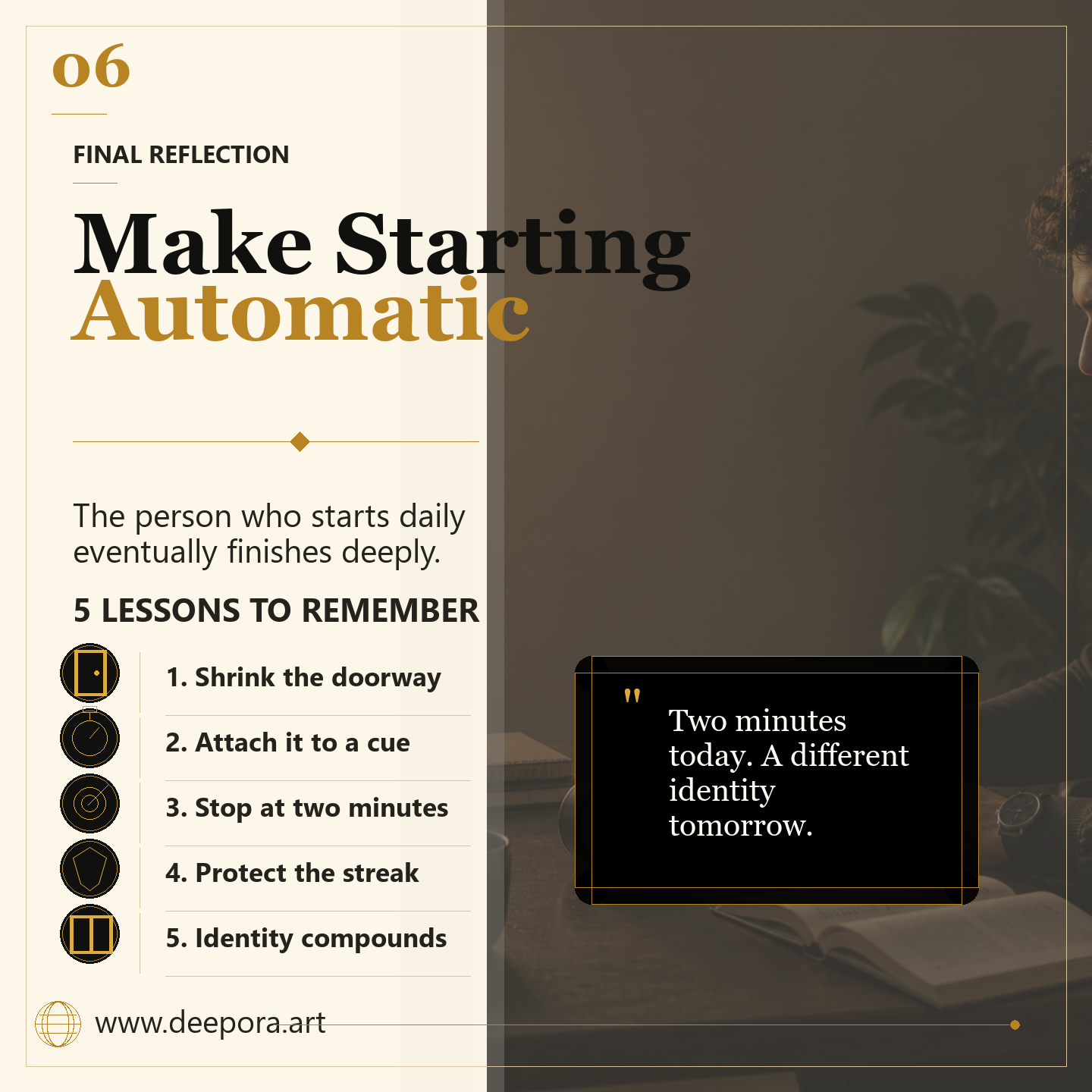
Most failed habits do not fail in the middle. They fail before they start. The first lesson is to respect the starting line. If you make the first step too large, your future self will keep negotiating with it.
Lesson 02: Shrink the Habit Without Shrinking the Goal
Reading one page does not mean your reading goal is small. It means your entry point is intelligent. Serious goals can begin with tiny actions because the tiny action is not the destination. It is the doorway.
Lesson 03: Build Evidence Before You Demand Identity
You cannot bully yourself into a new identity. You build it through repeated proof. Every two-minute start says, "I am someone who returns." That evidence matters more than one heroic day.
Lesson 04: Stop Confusing Intensity With Commitment
Intensity feels impressive, but consistency is what changes identity. A habit that can survive a tired day is stronger than a habit that only works when motivation is high.
Lesson 05: Make the First Step Emotionally Cheap
The first version of a habit should not require a debate. If it triggers dread, shame, or perfectionism, it is too expensive. Lower the emotional cost until starting feels almost obvious.
Lesson 06: Use Momentum, But Do Not Depend on It
Often you will continue past two minutes. That is useful. But the win is not continuing. The win is starting. If you stop after two minutes, you still protected the identity of showing up.
Lesson 07: Attach the Habit to a Clear Cue
A tiny habit becomes stronger when it has a specific trigger. After dinner, open one page. After brushing your teeth, sit for five breaths. After opening the laptop, write one sentence. Vague habits depend on mood. Cued habits depend on design.
Lesson 08: Standardize Before You Optimize
Do not optimize a routine that does not yet exist. Do not buy the perfect notebook before you have used the simple one. Do not design the perfect workout before you have become someone who shows up. First make the behavior normal.
Lesson 09: Never Let Small Feel Meaningless
A small action repeated daily is not small in the same way a random small action is small. Repetition changes meaning. One page is not just one page when it protects the habit of reading.
Lesson 10: Let Identity Compound Quietly
The deepest change is usually quiet. You do not wake up one morning transformed. You notice that starting has become less dramatic. You notice that missing once no longer becomes quitting. You notice that your self-image has more evidence behind it.
The Real Difference: Task Rule vs Habit Rule
The phrase "2 Minute Rule" can mean two different things, and confusing them makes the idea weaker.
| Version | Core Idea | Best Use |
|---|---|---|
| Productivity task rule | If a task takes less than two minutes, do it now. | Clearing small tasks, reducing clutter, managing quick obligations. |
| Atomic Habits rule | When starting a new habit, make the first version take less than two minutes. | Building consistency, reducing procrastination, creating identity evidence. |
Both are useful. But Rohan needed the second one. His problem was not a pile of tiny tasks. His problem was that meaningful habits felt too heavy to begin.
How to Use the Rule Today
- Name the full habit. Be honest about what you actually want: study daily, read nightly, exercise, write, save money, clean, pray, meditate, practice a skill.
- Find the doorway action. Ask: what is the first physical action that proves I have started?
- Make it take less than two minutes. If it still feels heavy, shrink it again.
- Attach it to a cue. Choose a time, place, or existing routine that naturally triggers the action.
- Track showing up, not performance. In the beginning, measure whether you started. Quality can grow later.
- Stop if needed without guilt. The rule only works if two minutes is allowed to count. Otherwise the brain learns that "two minutes" was a lie.
- Expand slowly after consistency appears. Once the tiny start feels normal, let the habit grow naturally.
Mindset Shifts That Matter
| Old Thinking | Better Thinking |
|---|---|
| If it is small, it does not matter. | If it repeats, it matters. |
| I need motivation before I start. | I need a start small enough that motivation is optional. |
| Two minutes is not enough progress. | Two minutes is enough to protect the habit. |
| I failed because I am inconsistent. | I failed because the entry point was too heavy. |
| I need a perfect routine. | I need a reliable doorway. |
| Discipline means doing the full version daily. | Discipline begins with returning daily. |
Daily Practices to Build
The One-Page Night
Put one book beside your bed. Every night, read one page. You may continue if you want, but one page counts. This trains the identity of a reader without making reading depend on an ideal evening.
The Shoes-First Walk
If fitness feels heavy, make the habit "put on shoes and step outside." Once outside, you can walk for two minutes or continue longer. The important part is that the body learns the doorway.
The Open-Notes Study Cue
After dinner, open your notes and solve one question. Do not begin with the promise of a long session. Begin with proof that you are someone who returns to the material.
The One-Line Writing Habit
Open the document and write one sentence. Writers are built by returning to the page. Some days the sentence will become a paragraph. Some days it will remain one sentence. Both count at the identity level.
The Two-Minute Reset
When a day is going badly, choose one two-minute action that puts you back on the path: clear the desk, write tomorrow's first task, walk outside, drink water, open the book. You are not fixing the whole day. You are preventing a slide.
Instagram Carousel Summary
Save this visual summary for the practical ideas from the article.
Frequently Asked Questions
What is the Atomic Habits 2 Minute Rule?
The Atomic Habits 2 Minute Rule says that when you start a new habit, the first version should take less than two minutes. The goal is not to finish the whole habit immediately. The goal is to make starting so easy that resistance drops.
Is the 2 Minute Rule the same as doing only tiny work forever?
No. The tiny version is a gateway. You use it to standardize the act of showing up. Once showing up becomes reliable, the habit can naturally expand.
How is James Clear's 2 Minute Rule different from the productivity rule in Getting Things Done?
The Getting Things Done version says if a task takes less than two minutes, do it now. James Clear's habit version says scale a new habit down so the starting ritual takes less than two minutes. One is about task management; the other is about habit formation.
Why does the 2 Minute Rule help with procrastination?
Procrastination often lives at the starting line. A large plan creates emotional friction before any work begins. A two-minute entry point lowers the cost of starting and lets momentum begin.
Can the 2 Minute Rule work for serious goals?
Yes, but only if you understand its role. Serious goals still need real work. The 2 Minute Rule helps you become the kind of person who starts consistently, and consistency is the base that deeper work grows from.
Reflection Prompt
Where in your life are you demanding the full version before you have built the habit of starting?
Go Deeper
James Clear explains the Two-Minute Rule in his own article on stopping procrastination: How to Stop Procrastinating by Using the Two-Minute Rule. His official Atomic Habits page is also useful for understanding the broader system of tiny improvements and identity-based change.
Read also:

The Two-Minute Rule is not a trick for doing less. It is a method for becoming less dependent on perfect conditions. Rohan's life did not change because two minutes were magical. It changed because two minutes were honest. Small enough to do. Clear enough to repeat. Humble enough to survive a bad day.
That is where real habits begin: not at the finish line, but at the doorway.
Disclaimer: This article is an educational Deepora adaptation inspired by themes from Atomic Habits by James Clear. Rohan is a fictional composite character created for storytelling. Full credit for the original habit frameworks belongs to James Clear and his published work. This article is for educational storytelling purposes only and is not professional advice. See the Deepora Disclaimer.

0 Comments