
There is a specific kind of danger that does not look dangerous while it is growing.
It does not arrive as a dramatic flaw. It does not announce itself as arrogance. It does not walk into the room wearing a crown and demanding attention. Most of the time, it looks like confidence. It sounds like decisiveness. It feels like the natural reward for years of hard work.
That is why ego is difficult to catch early. By the time it becomes obvious to you, it has usually been obvious to everyone else for a long time.
I once heard the story of a man named Arjun from someone who had worked under him. Not a villain. Not a cartoon of pride. A capable man. A sharp man. The kind of person who could enter a messy meeting, understand the real issue in ten minutes, and say the one sentence everyone else had been circling for an hour.
That ability built his career.
It also nearly destroyed it.
The man who started winning too early
Arjun was not born into importance. He built his reputation the slow way: useful work, long hours, careful preparation, and the habit of listening more than he spoke. In his first job, he carried a small notebook everywhere. When senior people explained something, he wrote it down. When clients complained, he did not interrupt. When a project failed, he asked what he had missed.
People trusted him because he was teachable.
By thirty-two, he had become the person younger employees tried to sit next to in meetings. He had a way of making complicated things simple. If a team was confused, he could organize the problem. If a client was angry, he could calm the room. If a deadline looked impossible, he could find the path through.
Then came the promotions.
The first one made him grateful. The second made him busy. The third made him important. Somewhere inside that rise, a quiet exchange happened. The habits that had made him valuable began to feel beneath him. Listening became slower than deciding. Asking became less attractive than announcing. Feedback became irritating because it interrupted the story he had started believing about himself.
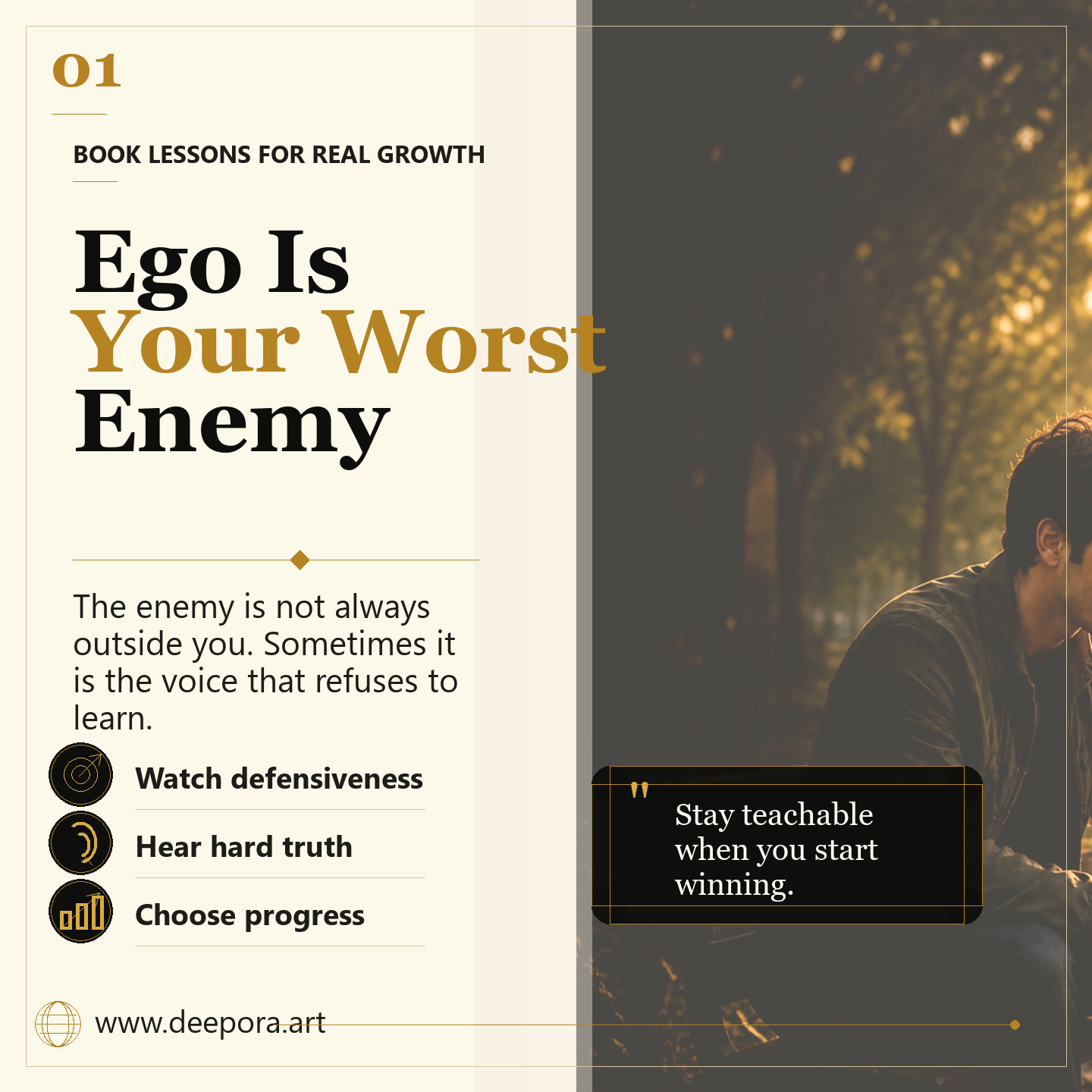
This is the central warning inside Ryan Holiday's Ego Is the Enemy: ego does not only attack weak people. It attacks capable people precisely because capability gives it material to work with.
Ego takes real ability and turns it into a false identity. It says, "Because you were right before, you are probably right now." It says, "Because you worked hard once, you deserve exceptions now." It says, "Because people praised your judgement, correction is disrespect."
That is how a strength becomes a blind spot.
How ego changed the room before it changed him
The first people to notice were not his critics. They were the people who liked him.
A junior teammate stopped bringing rough ideas to him because Arjun had started cutting them off too quickly. A peer stopped challenging him in strategy calls because every disagreement turned into a performance. His old mentor, the man who had once corrected his thinking with patience, called less often because the conversations had become one-sided.
Arjun did not see distance. He saw inefficiency.
He told himself people were becoming sensitive. He told himself the team needed stronger direction. He told himself that great work sometimes required hard edges.
Some of that was true enough to be dangerous. The best excuses usually contain a small amount of truth.
But what was really happening was simpler: people were learning that honesty around him had become expensive.
When someone disagreed, he argued like the disagreement was an attack. When someone pointed out risk, he treated caution like weakness. When someone else succeeded, he found a way to reduce the achievement in conversation. Not openly. Not cruelly. Just enough to keep his own position untouched.
That is the practical meaning of ego is your worst enemy. It does not always make you loud. Sometimes it makes you lonely. It slowly removes the people who would have saved you from your own worst thinking.
The correction he refused to hear
The break came during a product launch review.
The launch had missed its numbers. Not catastrophically, but clearly. There were reasons: market timing, weak onboarding, a pricing assumption that had not held. A younger analyst in the room had prepared a document showing that some of these risks had been visible weeks earlier.
Arjun skimmed the document and closed it.
"This is hindsight," he said.
The analyst tried to explain that the warning signs had been shared earlier. Arjun replied before she finished. He said the team needed ownership, not postmortems. He said smart people can make any failed outcome look predictable afterward.
The room went quiet.
That silence felt like agreement to him.
It was not agreement. It was withdrawal.
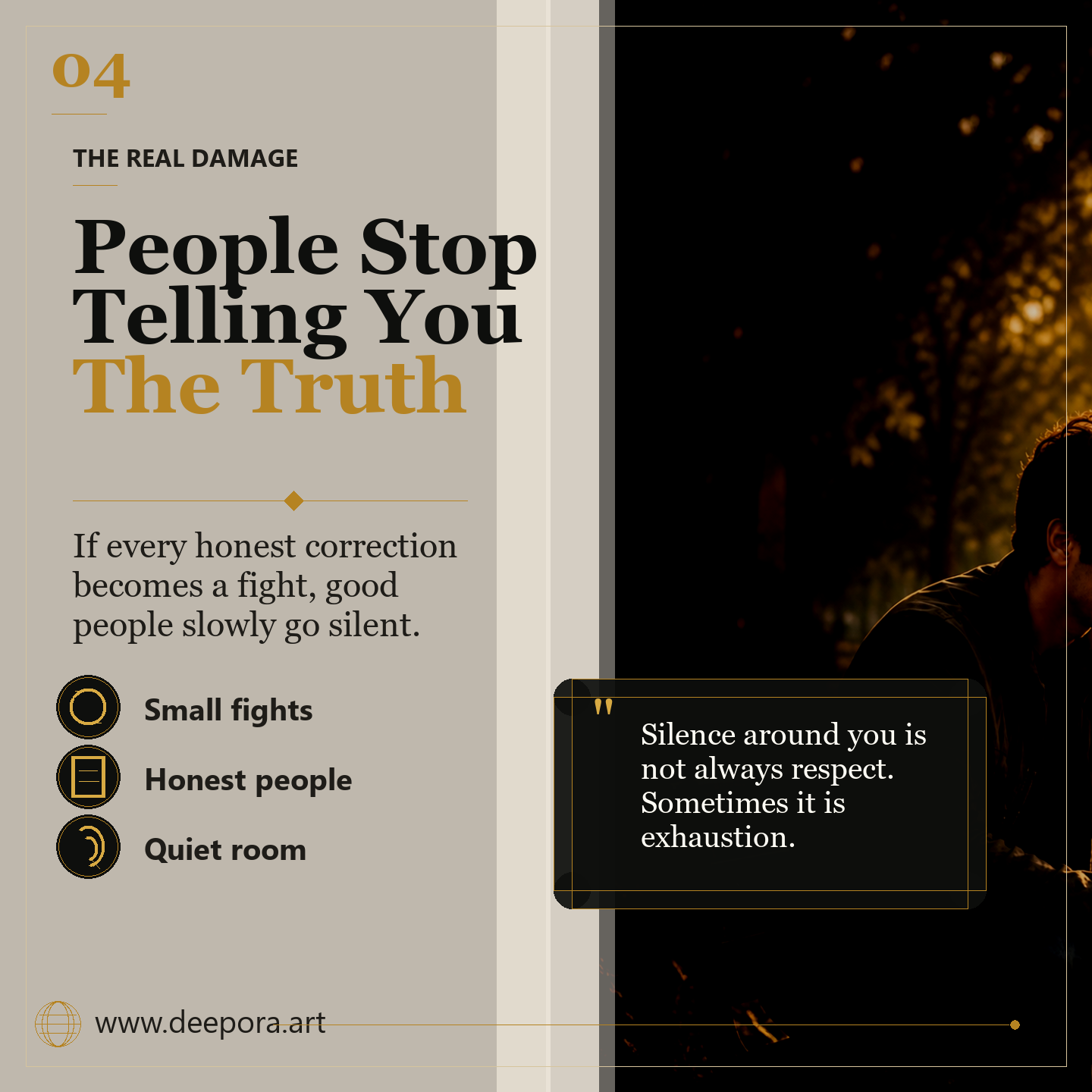
Three months later, when another strategic decision came up, fewer people challenged him. They did not believe he was right. They simply no longer believed speaking up would help. That is when ego becomes operationally dangerous. It does not only damage your character. It damages the information system around you.
A leader who cannot hear truth starts making decisions inside a room built from approval.
The fall was quieter than the rise
Arjun did not lose everything in one scene. There was no dramatic public humiliation. The damage was more ordinary, which made it harder to narrate.
A project was reassigned. Then another. A senior leader began asking for second opinions before approving his plans. His team, once loyal, became compliant but emotionally absent. The work still moved, but the trust was gone.
Eventually he was moved into a role with less direct authority. On paper, it was a strategic shift. In reality, it was containment. The organization still valued his intelligence. It no longer trusted his judgement with people.
That distinction hurt him more than the title change.
For the first time in years, he had time to think. He reread old messages from the mentor he had stopped calling. He looked at feedback he had dismissed. He noticed patterns he had explained away. The evidence had been there. His ego had simply made it unreadable.
When he later read Ego Is the Enemy, one idea disturbed him more than the rest: ego is not confidence. Confidence is earned from evidence. Ego is the demand to be treated as complete before the work is complete.
That sentence, he told someone later, felt like a diagnosis.
What this story really teaches
The point is not that ambition is bad. Ambition built Arjun's career. The point is that ambition without self-correction becomes self-deception.
Ego is dangerous because it corrupts the tools that growth depends on:
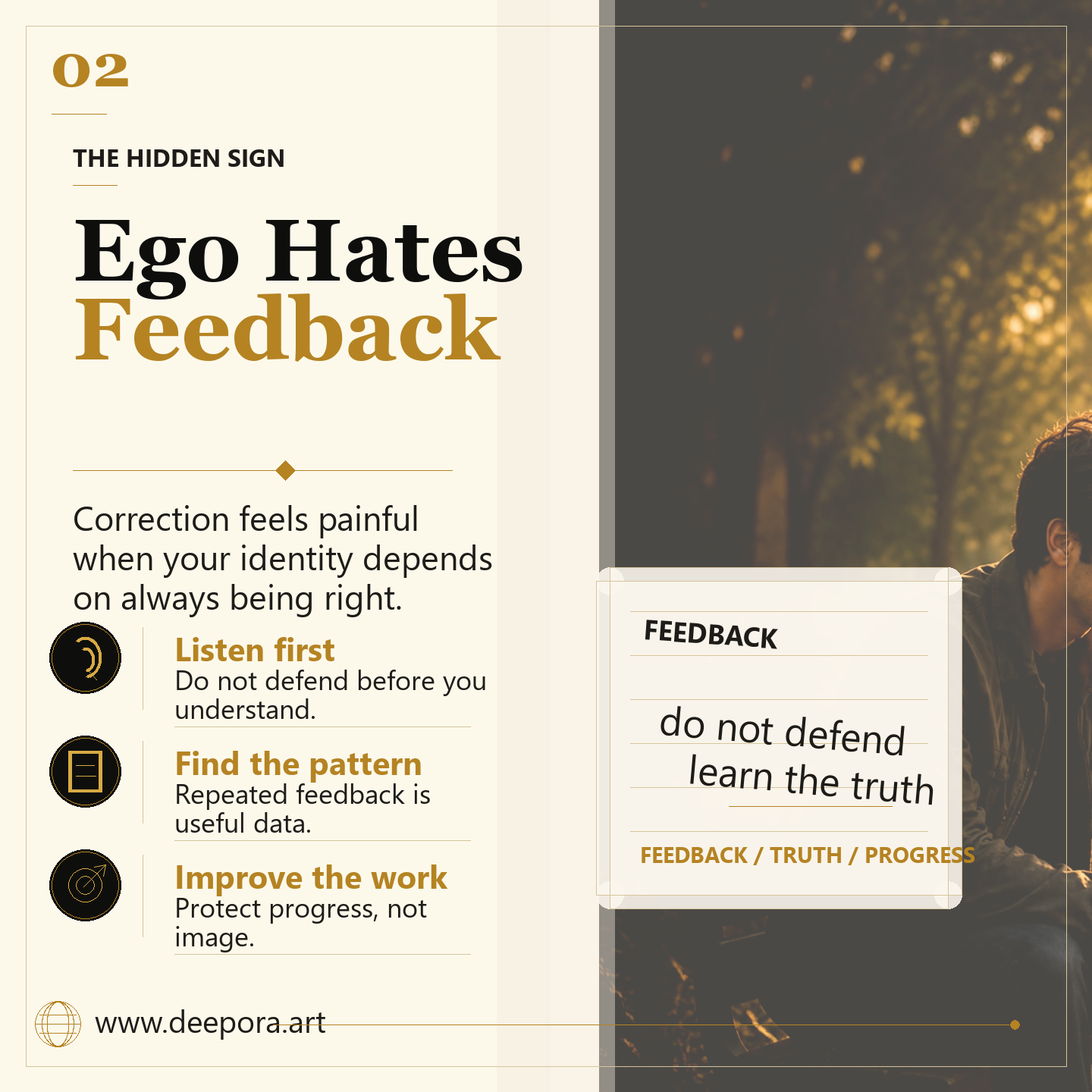
- It turns feedback into insult.
- It turns success into permission.
- It turns confidence into performance.
- It turns disagreement into disloyalty.
- It turns learning into something only beginners need.
The deepest lesson is this: the moment you start needing to look right more than you need to become right, ego has taken control of the work.
Ego's three hidden stages
1. Ego while aspiring
At the beginning, ego makes you more interested in the image of becoming than the discipline of becoming. You talk too early. You announce too much. You start enjoying the identity before you have built the substance.
This is why quiet work matters. It protects the energy that performance tries to steal.
2. Ego while succeeding
This is the most dangerous stage because the world appears to agree with you. Promotions, money, praise, followers, clients, and applause all become evidence for the ego's favorite argument: "I am different now. The rules are different for me."
Success should increase discipline. Ego uses success to relax it.
3. Ego while failing
When failure arrives, ego makes it impossible to learn. It turns a mistake into an identity crisis. Instead of asking, "What happened?" it asks, "How do I protect my image?" Blame becomes easier than analysis.
Without ego, failure is information. With ego, failure becomes humiliation.
Confidence vs ego
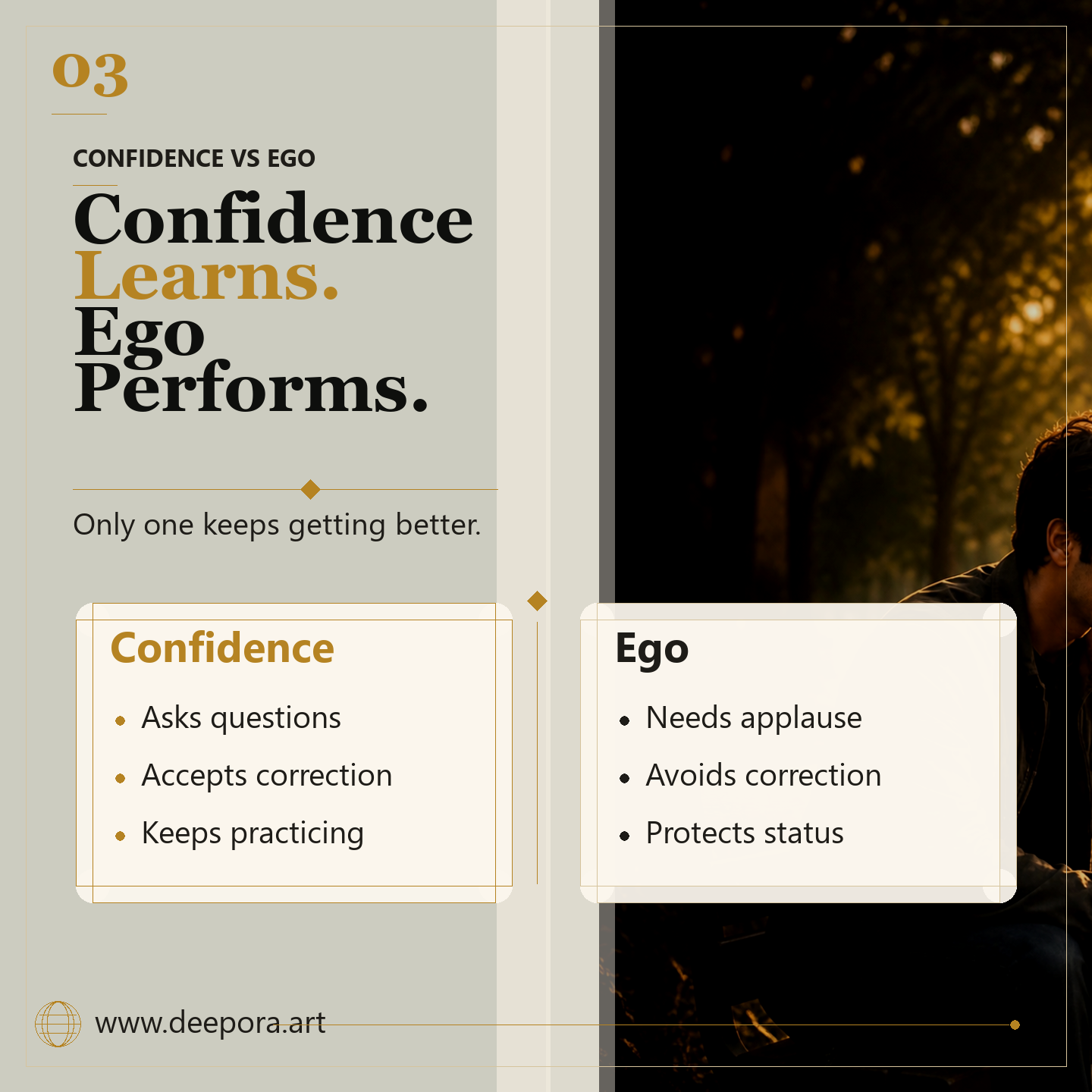
| Situation | Confidence | Ego |
|---|---|---|
| Receiving feedback | Looks for the useful part | Defends the self-image |
| Someone else succeeds | Studies what worked | Feels diminished |
| Being corrected | Adjusts quickly | Argues for status |
| Making a mistake | Names the lesson | Names someone to blame |
| Winning | Raises the standard | Demands exceptions |
10 lessons from Ego Is the Enemy
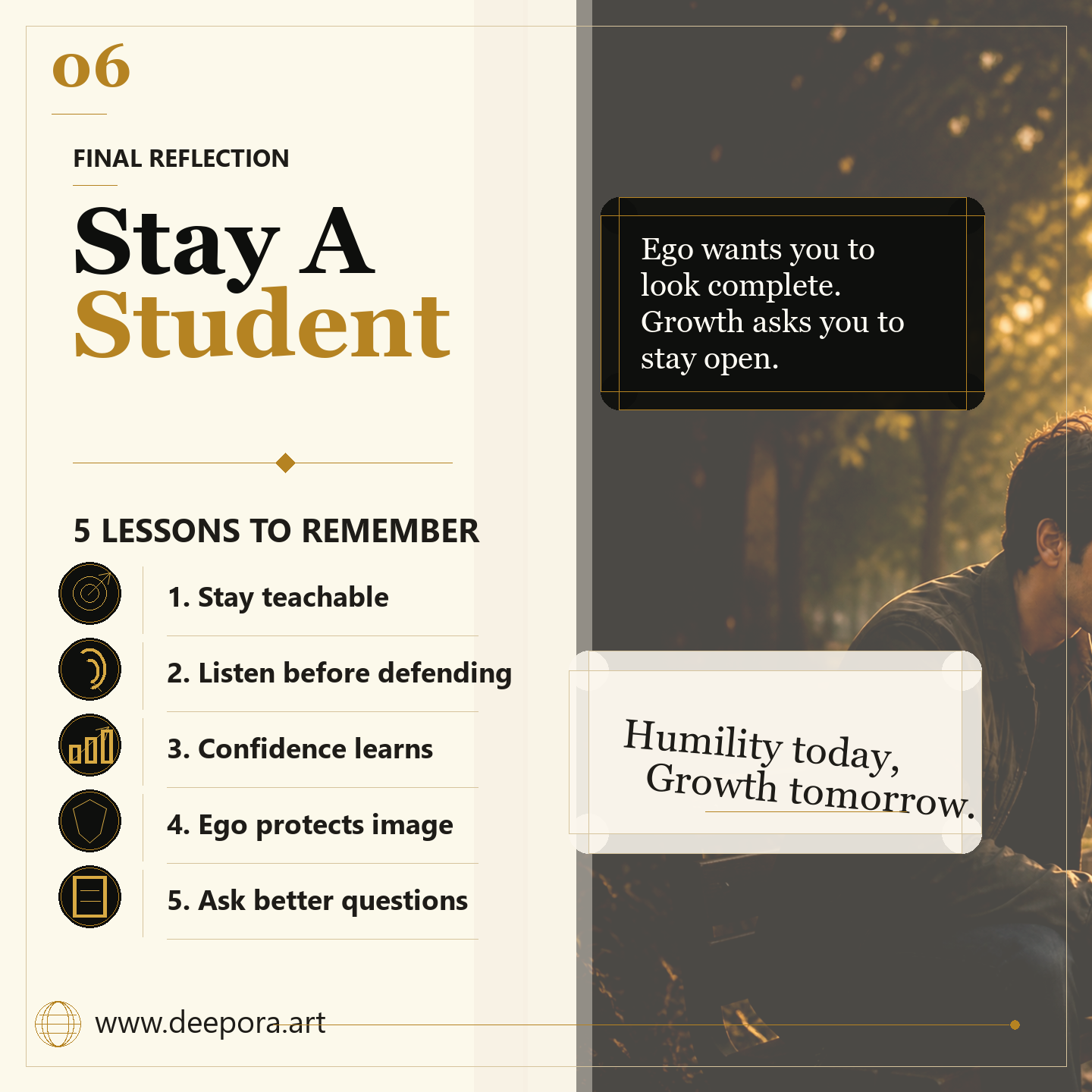
Lesson 01: Stay a student
The strongest people keep a beginner's relationship with reality. They do not treat learning as something they have graduated from.
Lesson 02: Let work measure you
Ego wants identity to matter more than output. Work brings the conversation back to evidence.
Lesson 03: Do not confuse speed with wisdom
Fast judgement feels powerful, but the best decisions often require the humility to listen longer than feels necessary.
Lesson 04: Treat criticism as data
Not all criticism is correct. But dismissing all criticism is a reliable way to stay blind.
Lesson 05: Notice when people go silent
If honest people stop challenging you, do not assume you have become impossible to question because you are right. You may have become costly to question because you are defensive.
Lesson 06: Success is not permission
Winning once does not make discipline optional. It makes discipline more important because more people are now affected by your choices.
Lesson 07: Repair quickly
When ego creates distance, do not wait for a perfect apology. Name the moment, take responsibility, and reopen the channel.
Lesson 08: Seek reality, not reassurance
The question is not "Do people approve of me?" The question is "Am I seeing the situation accurately?"
Lesson 09: Choose purpose over performance
Performance asks how the work makes you look. Purpose asks what the work requires.
Lesson 10: Keep one person who can correct you
Everyone needs someone whose honesty outranks their approval. Without that person, ego gets too much privacy.
Mindset shifts that matter
| Old thought | Better thought |
|---|---|
| I already know this. | What am I missing because this feels familiar? |
| They are attacking me. | What part of this feedback might be useful? |
| I earned my position. | I have to keep becoming worthy of responsibility. |
| I need to look certain. | I need to see clearly. |
| Silence means agreement. | Silence may mean people stopped trusting the room. |
Daily practices to keep ego in check
The full listen
Once a day, let someone finish completely before you respond. Do not prepare your answer while they speak. Listen for the part that threatens your certainty.
The 20 percent rule
When feedback irritates you, ask: "What if 20 percent of this is true?" You do not need to accept the whole criticism. You need to stop rejecting reality just because it arrived imperfectly.
The silent work block
Spend thirty minutes working on something without announcing it, posting it, or narrating it. This trains you to value progress without an audience.
The weekly ego audit
At the end of the week, write three answers: Where did I defend instead of learn? Where did I seek credit? Where did someone go quiet around me?
Practical action steps
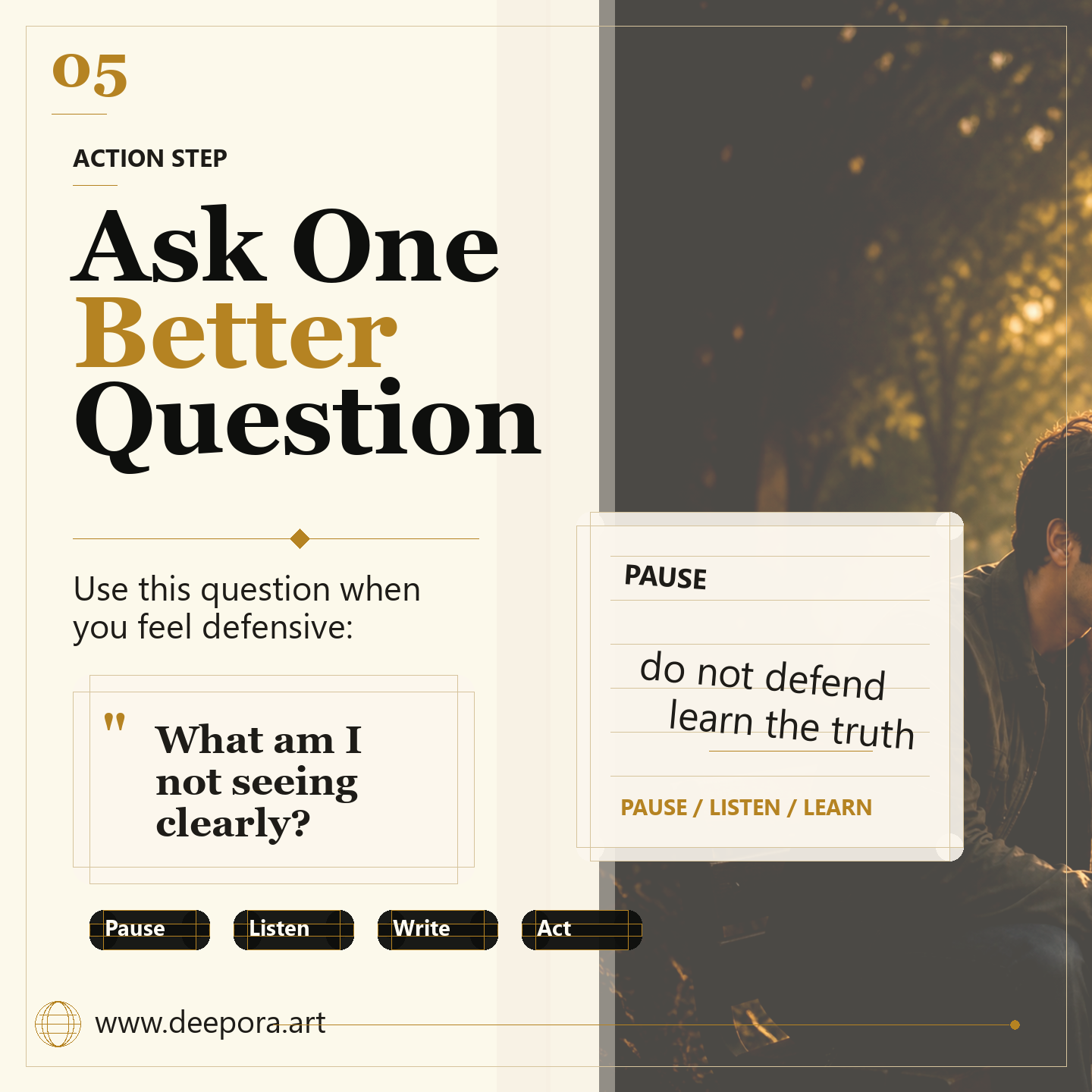
- Ask one trusted person: "Where do I become difficult to correct?"
- Find one piece of feedback you dismissed and reread it without defending yourself.
- Apologize to one person you interrupted, reduced, or ignored.
- Choose one project and improve the work quietly before explaining yourself.
- Write down the difference between being right and becoming better in your current situation.
Instagram Carousel Summary
Save this visual summary for the practical ideas from the article.
Frequently Asked Questions
Is ego the same as confidence?
No. Confidence is grounded in evidence. Ego is an inflated identity that resists evidence. Confidence can hear correction. Ego experiences correction as a threat.
Why is ego most dangerous during success?
Because success makes ego easier to justify. Praise, money, promotions, or public approval can make a person believe that discipline and humility are no longer necessary.
How do I know ego is affecting me?
Look for defensiveness, resentment when others succeed, irritation at feedback, and fewer people telling you the truth. These are practical signals, not abstract personality flaws.
Reflection prompt
Right now, where are you protecting the image of who you are instead of improving the reality of how you work?
Go deeper
Read the original ideas in Ryan Holiday's Ego Is the Enemy. For the philosophical root behind much of Holiday's thinking, see the Stanford Encyclopedia of Philosophy's entry on Stoicism.
Disclaimer: This article is an educational Deepora adaptation inspired by themes from Ego Is the Enemy by Ryan Holiday. Arjun is a fictional composite character created for storytelling. Full credit for the original book's ideas belongs to Ryan Holiday and his published work.



0 Comments