

The Man Who Became His Own Worst Enemy
A story inspired by Ryan Holiday's Ego Is the Enemy — on how unchecked pride dismantles the people who seem to have everything, and why the real war is always internal.
I knew a man who was, for a brief period, exactly who he had always wanted to be. At thirty-four he was running a department of sixty people. His name appeared in the kind of industry articles that get shared over coffee on Monday mornings. His opinion was sought in meetings. His salary was what he had once written as a goal in a notebook at twenty-two, circled twice, and kept under his bed like a promise.
By thirty-eight, almost all of it was gone. The role, the respect, the money — and stranger than all of that, the friendships. The people who had stood closest to his rise were the ones who had watched most clearly as he fell.
His name was Vikram. I met him three years after it happened, at a conference where he was attending as a delegate rather than a speaker. He told me his story over two cups of coffee in a hotel lobby, without self-pity, with the kind of clarity that only comes when you have spent a long time sitting with an uncomfortable truth.
"I didn't lose because I failed," he said. "I lost because I succeeded — and then I stopped being someone worth being around."
The rise had been real. Vikram was genuinely good at his work — not lucky, not merely well-connected, but skilled in the specific way that makes people stand out inside large organizations. He had been a careful listener in his twenties, the kind of person who took notes when the senior people spoke and asked questions that made them feel their experience was valuable.
But somewhere between the first promotion and the third, something shifted. He started finishing other people's sentences. He began taking less time in meetings because he had already decided the answer before the meeting started. He stopped calling his mentor — a man who had given him his first real break — because the conversations no longer felt productive. What he meant was: they no longer felt useful to him specifically.
Ego is the voice that tells you you're better than you are. It is the whisper that says you've already arrived — before you have. And it is the same voice that, when you finally do arrive, tells you the rules no longer apply to you.
— Inspired by Ryan Holiday, Ego Is the EnemyHis team noticed before he did. People who had once come to him with problems started going around him. His peer relationships, once collegial, became transactional. And Vikram — because ego is a very effective blindfold — interpreted all of this as evidence of other people's limitations rather than his own.
He thought they were threatened. He thought they didn't understand his vision. He thought they needed him more than he needed them.
He was wrong on every count.
The fall, when it came, was not dramatic. There was no single moment of humiliation, no public confrontation. It was quieter than that — a restructuring that left him in a diminished role, a severance package accepted without ceremony, a LinkedIn profile updated with language designed to make a retreat look like a pivot.
He moved back to his hometown. He had time, suddenly, which he had not had in years. And with the time came the questions he had been too busy and too certain to ask.
He started reading. Not business books — he had been saturated with those. He read history. Philosophy. Biography. He was trying to understand how men who seemed to have everything had ended with so little, and whether the pattern was one he recognised in himself.
It was a friend who handed him the book. Ryan Holiday's Ego Is the Enemy. Vikram read it in two days. He told me he put it down three times because it described him with a precision that felt personal — as if Holiday had been watching him through a window for the past decade.
What the book says that no one wants to hear: Ego doesn't only damage you in failure. It damages you in success, too — often more insidiously, because success feels like confirmation. The dangerous version of ego isn't arrogance in defeat. It's arrogance at the peak, when everything is going your way and the world seems to be agreeing with your most inflated opinion of yourself.
"The thing that broke me," Vikram said, "was realising that I had confused being good at my work with being a good person. They are not the same thing. I had treated my competence as a license. And it cost me almost everything."
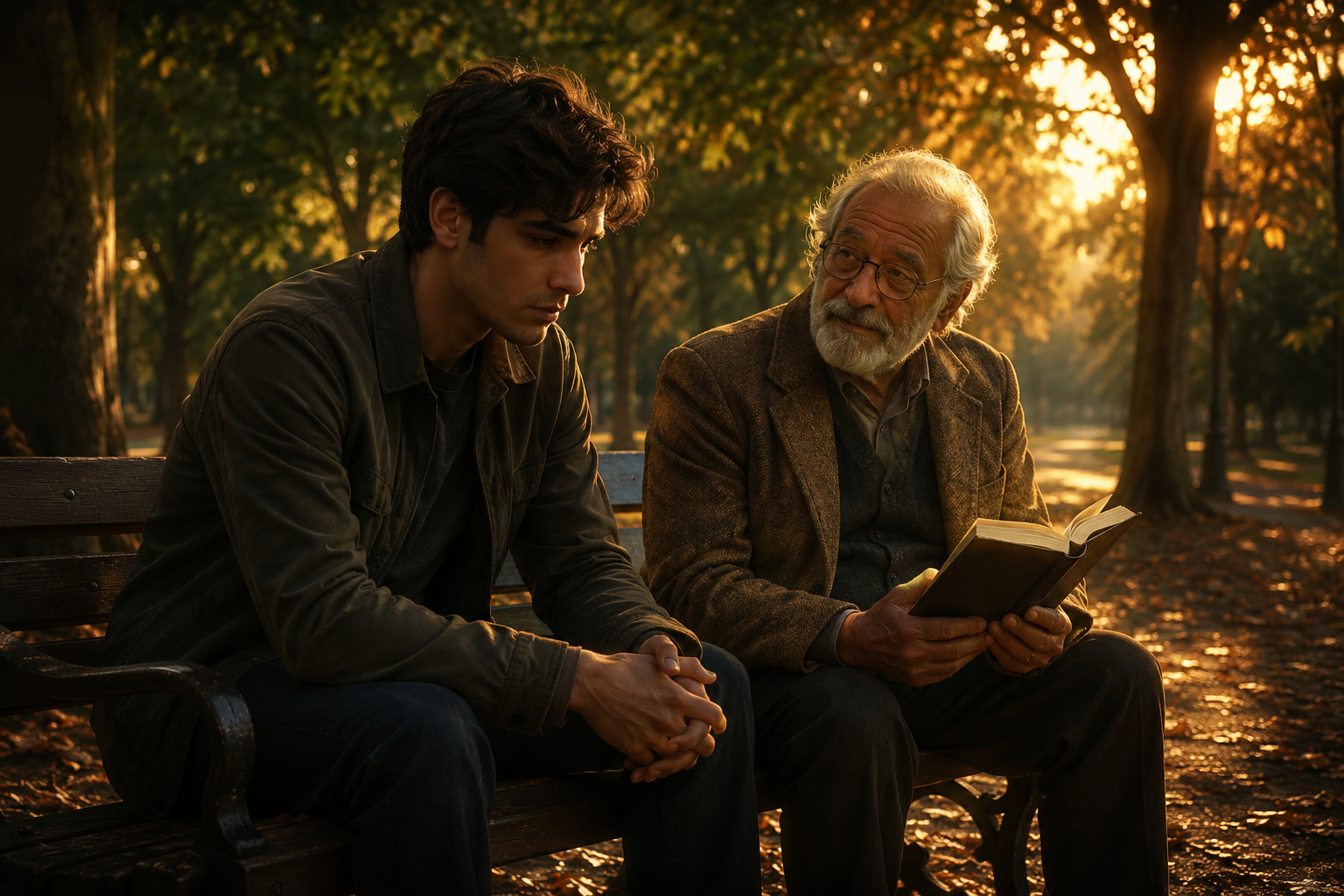
He spent a year rebuilding — not his career, not yet, but himself. He went back to his mentor and apologized. He called the people he had dismissed and listened to them this time. He took a smaller job that required him to be a student again rather than an authority, and he found, to his surprise, that he still remembered how.
The ego, he told me, doesn't disappear. It doesn't go away because you understand it, or because you've been humbled, or because you've read the right book. It returns in new forms, wearing different disguises. The work is not to kill it. The work is to notice it — every time, in real time, in the small moments before it makes a decision for you.
That is the real practice. Not grand gestures of humility. Just the daily, unglamorous work of keeping the ego in its proper place.
I thought about Vikram for a long time after that conversation. Not with sympathy exactly, but with recognition. Because the version of himself he had described — the one who had stopped listening, who had grown certain, who had mistaken arrival for completion — didn't sound extraordinary. It sounded entirely ordinary.
It sounded like something that could happen to anyone who starts winning.
Ego Is the Enemy — The Distilled Truth
Every realization in this story maps to a real principle from Ryan Holiday's book — on why ego is not your ally, even when things are going well.
When You Aspire
Ego makes you talk about your ambitions instead of working quietly toward them. It makes you more interested in the story of your becoming than in the actual work of becoming.
When You Succeed
Ego makes you believe success was entirely your doing — and that it will continue simply because you deserve it. It is the most dangerous stage because everything seems to confirm it.
When You Fail
Ego makes failure catastrophic rather than instructive. It turns setback into identity crisis. Without it, failure is information. With it, failure is annihilation.
Talk Less, Do More
Every time you talk about what you're going to do, you drain the energy that should go into doing it. Ego loves narrating the story of your ambition. Mastery requires silence and work.
Stay a Student
The most dangerous moment in any learning journey is when you start to feel like you've arrived. Ego closes the mind precisely when it most needs to stay open — at the peak.
Don't Tell Your Story Too Early
Ego needs an audience. It seeks validation before the work is done. But premature identity — calling yourself a writer before you write, a leader before you lead — makes the actual work feel secondary.
Work Is the Measure
Ego substitutes identity for effort. It convinces you that who you are is more important than what you produce. But in the long run, output is the only honest metric that survives.
Manage Yourself Before You Manage Others
The leader who has not conquered their own impulses — impatience, the need to be right, the intolerance of criticism — cannot be trusted with the lives and careers of others. Self-mastery precedes leadership.
Success Is Not Permission
Achieving something does not make the rules of discipline, humility, and hard work optional. Ego convinces the successful that they have earned exceptions. That is exactly when the fall begins.
Make Failure a Teacher
Without ego, failure is data. With ego, it is a verdict. Holiday argues for a stoic relationship with setback — not suppression, but honest accounting. What went wrong? What can be improved? Start there.
The Canvas Strategy
Early in a career — and again after any fall — the most powerful move is to make space for others. Help others succeed. Clear the path for people above you. This is not weakness; it is the most strategic form of patience.
Be Present, Not Prominent
Ego demands recognition. It is obsessed with how things look rather than how they are. The antidote is radical presence — absorbed completely in the work, indifferent to the audience watching you do it.
Purpose Over Passion
Passion, Holiday argues, is often ego in disguise — a feeling-first orientation that burns bright and burns out. Purpose is quieter, more durable. It is not about how you feel about the work. It is about the work itself.
| Situation | Ego-Driven Response | Purpose-Driven Response |
|---|---|---|
| Receiving criticism | Defensiveness, dismissal, counterattack | Curiosity — what is true in this? |
| Someone else succeeds | Comparison, resentment, need to diminish their win | Genuine interest — what can I learn from their path? |
| Reaching a goal | Entitlement — I've arrived, standards relax | Recommitment — what's the next level of mastery? |
| Facing failure | Identity crisis, blame, narrative revision | Honest accounting — what went wrong, what's next? |
| Working with others | Need to be the most visible, most credited | Focus on the outcome — credit is secondary |
| Being a beginner at something new | Avoidance — ego resists looking incompetent | Embrace — mastery always begins with not knowing |
| When asked for help | Perform certainty even when uncertain | Honest "I don't know" — and go find out |
Before any input — phone, news, notifications — spend 30 minutes simply working. No narration, no sharing, no announcement. Just the work. This trains the part of you that works for the sake of the work rather than the audience.
In every conversation today, resist the urge to complete the other person's thought, to jump to your answer, to steer toward your point. Listen until they are fully finished. Then pause before responding. Do this once per day, deliberately.
At the end of each week ask: Where did I perform rather than work this week? Where did I seek credit I didn't entirely earn? Where did I dismiss someone whose view I should have considered? Not for shame — for accuracy.
Once a month, do something you are not good at. Deliberately. The ego atrophies when it is not fed with competence. Regular encounters with not-knowing keep the mind honest and genuinely open to learning.
Once a week: do something useful for someone else's work without any expectation of credit or return. Help a junior colleague. Recommend someone for an opportunity. Clear a path. The habit of contribution without recognition is the direct antidote to ego's most corrosive form.
- Identify one relationship in your life where ego has created distance — a colleague you've stopped listening to, a mentor you've outgrown in your own mind, a peer whose success has made you quietly resentful. Name it honestly. Then make one small move toward it.
- Find the last piece of feedback you dismissed or disagreed with. Sit with it for ten minutes and ask: what if even 20% of this is accurate? What would that mean for how I work?
- Choose one current project and work on it for one week without telling anyone — no social share, no update, no mention. Notice what changes about your relationship to the work itself when no one is watching.
- Write down the three adjectives you most want people to use to describe you professionally. Then ask honestly: in the last six months, have your actions consistently voted for those qualities? Where is the gap?
- Read or re-read the chapter in Ego Is the Enemy titled "The Canvas Strategy." It is the book's most practically useful section — on how to make yourself indispensable by making others more successful rather than by promoting yourself.
"Right now, in your work and your relationships — are you performing success, or producing it? And do the people closest to you know the difference?"
Ego is not a personality flaw unique to the arrogant or the famous. It is a tendency in all of us — to seek recognition before we've earned it, to stop learning when we feel we've arrived, to interpret setbacks as affronts rather than information. Ryan Holiday's book is useful not because it describes people far worse than us, but because it describes us precisely. The man who became his own worst enemy was not a villain. He was simply someone who stopped asking the right questions at the moment they mattered most. The questions are available to all of us, all the time. The only requirement is the willingness to ask them honestly.
Disclaimer: This story was created to explore the key lessons of Ego Is the Enemy by Ryan Holiday. The character of Vikram is a fictional composite created for storytelling purposes. Full credit for all underlying ideas, frameworks, and philosophical positions belongs to Ryan Holiday and his published works. This blog is an educational adaptation for storytelling purposes only. Deepora Disclaimer.

0 Comments